
AAttio
Attio is a configurable CRM for managing customer records, sales pipelines, deals, and accounts. It combines a flexible data model with synchronized customer context, revenue workflow automation, AI-assisted research and updates, outreach sequences, call intelligence, and reporting.
Why people leave Attio
A team might seek an Attio alternative if its needs are simpler than the product’s increasingly broad revenue platform. Attio combines a configurable CRM with AI agents, automated enrichment and routing, outreach sequences, call intelligence, reporting, and developer tooling. Organizations that mainly need straightforward contact and deal tracking may prefer a narrower system with fewer concepts to configure and maintain. Likewise, teams whose processes are not centered on revenue operations may find a general-purpose database or a CRM designed for their specific workflow to be a closer fit.
Attio’s flexible data model can be valuable when a business needs custom objects, attributes, associations, and views. That flexibility also means adopters must decide how records should be structured, connected, enriched, and moved through workflows. A company that wants a more prescriptive CRM—with conventional account, contact, and opportunity structures already established—might evaluate alternatives to reduce implementation choices. Conversely, an organization with highly specialized requirements may want source-level customization rather than relying on the API, MCP server, App SDK, integrations, and managed extension model described in Attio’s materials.
Teams may also reconsider the product if they do not want AI and automation embedded deeply in customer operations. Attio presents agents that can research accounts, score and route leads, draft outreach, update records, summarize calls, identify risks, and recommend next actions. Although the pages describe assigned permissions, run records, approval controls, and the ability to pause or rerun work, some organizations may still prefer manual processes or a more limited automation boundary. Requirements around internal AI policies, data governance, predictable behavior, or human review could make a less agent-oriented CRM preferable.
Finally, organizations seeking open-source deployment, infrastructure control, or reduced dependence on one vendor may compare Attio with alternatives. The supplied pages emphasize Attio’s hosted application, proprietary Universal Context layer, native agents, integrations, and developer platform; they do not describe a self-hosted or source-available edition. Teams may therefore look elsewhere when they need to operate a CRM on their own infrastructure, inspect and modify its implementation, retain direct control over upgrade timing, or avoid building critical revenue processes around platform-specific workflows and extensions. Migration considerations may become more significant as custom data models, automations, and apps accumulate.
12 Best Open Source Attio Alternatives (Ranked)
Each alternative is evaluated for core feature coverage, deployment options, licensing, project health, and overall fit. The ranking prioritizes how closely a tool matches Attio's primary workflows, using popularity only as a secondary signal.
DDolibarr7,516
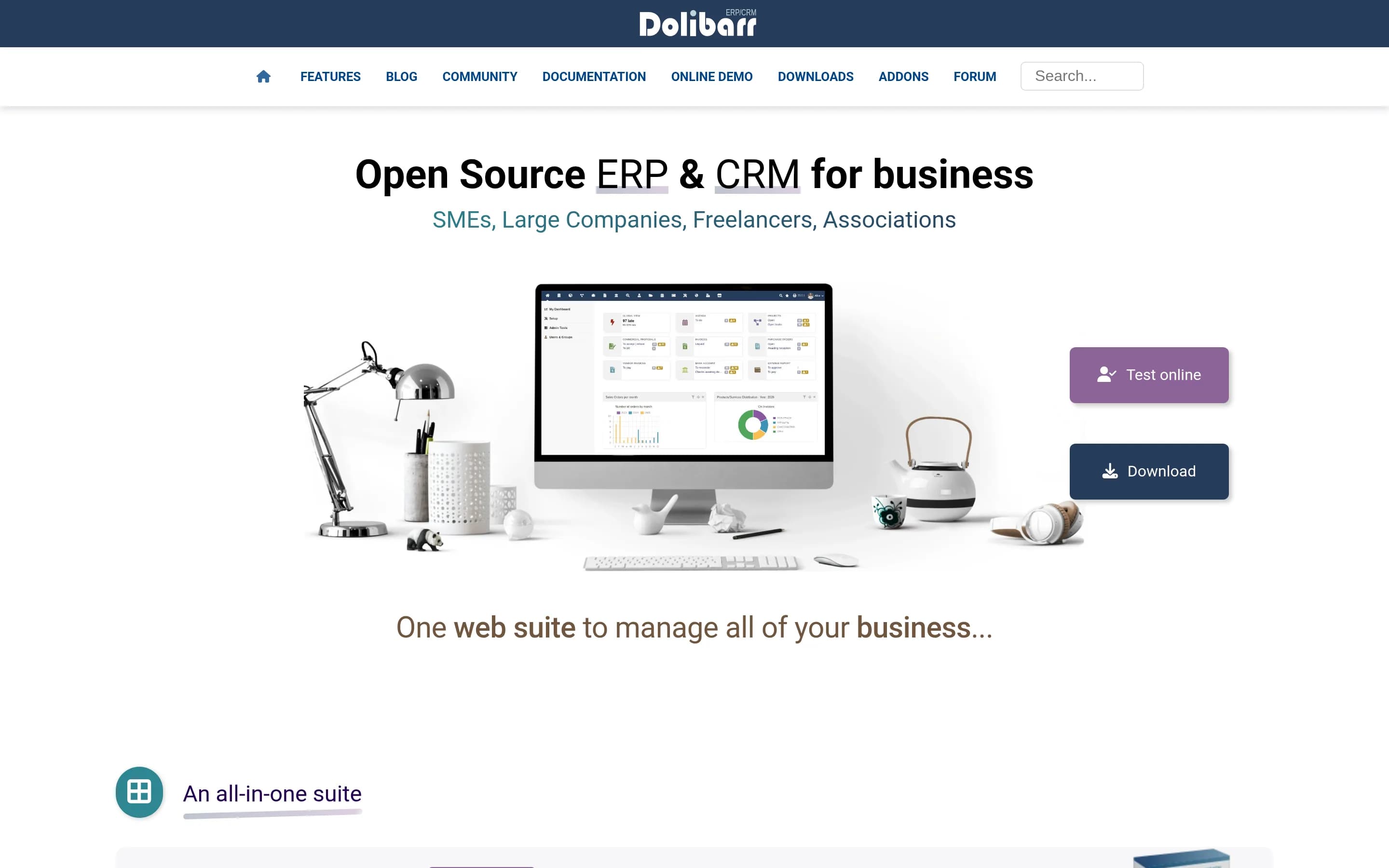
Choose Dolibarr when infrastructure control and an integrated CRM/ERP workflow—contacts, opportunities, proposals, orders, invoicing, inventory, and accounting—matter more than Attio’s flexible revenue data model and native AI automation. Choose Attio when the priority is configurable customer objects, synchronized context, enrichment, agent-driven workflows, outreach, or call intelligence; equivalent native coverage
What it does
Dolibarr is an open-source ERP and CRM suite for companies, foundations, and freelancers. Its documented modules cover customers, prospects, leads, contacts, commercial proposals, orders, contracts, interventions, tickets, invoices, payments, suppliers, purchasing, inventory, manufacturing, projects, agendas, HR, and accounting.
The application supports customizable dashboards, user-defined fields, multi-user permissions, multiple currencies, reporting, data import and export, mass emailing, REST and SOAP APIs, and third-party extensions. It can run as a standalone or web application, with installation through PHP and MariaDB, MySQL, or PostgreSQL, packaged distributions, or Docker; commercial hosted offerings are also available.
What it covers
- Customer, prospect, and contact records
- Lead and opportunity management
- Sales and operational reporting
- Custom fields and dashboards
- APIs and third-party extensions
- Data import and export
What’s different
- No documented equivalent to Attio custom objects and associations
- No documented native customer-context synchronization and enrichment
- No documented Attio-style agent workflow engine
- No documented AI CRM search and record actions
- No documented personalized outreach sequences
- No documented call recording, transcription, or intelligence
EEspocrm3,231
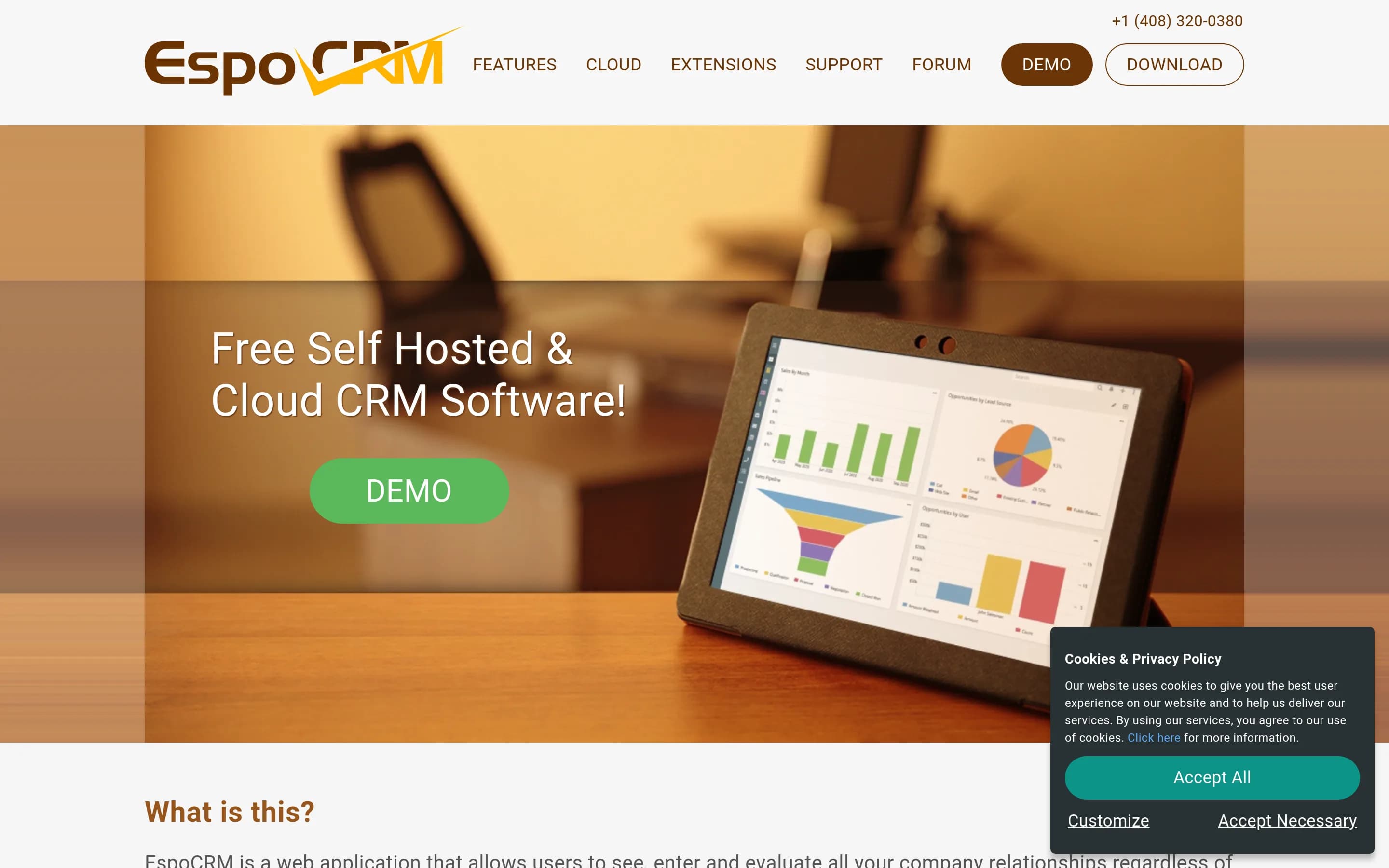
EspoCRM is the stronger choice when source access, self-hosting, and conventional CRM coverage matter more than Attio’s integrated revenue-intelligence layer. It covers leads, contacts, accounts, opportunities, customization, automation, reporting, email, and a REST API, but the supplied evidence does not establish equivalents for Attio’s synchronized enrichment, agent-driven workflows, personalized sequences, or AI‑
What it does
EspoCRM is an open-source CRM web application for storing, organizing, and managing leads, contacts, sales opportunities, marketing campaigns, support cases, and other business information. Its single-page frontend provides a documented user interface, while a PHP backend exposes a REST API.
The system supports customization through custom entities, fields, relationships, buttons, and extensions. It is intended for organizations seeking a free or on-premise CRM and can be downloaded and installed manually, by script, or with Docker. Supported databases include MySQL, MariaDB, and PostgreSQL.
What it covers
- Lead and contact records
- Account and opportunity tracking
- Sales-pipeline management
- Custom entities, fields, and relationships
- Kanban-style boards
- Workflow automation
- CRM reporting
- Email integration and templates
- Role-based permissions
- REST API integration
What’s different
- Attio-equivalent synchronized customer context
- Automatic firmographic enrichment
- Agent-based research, scoring, and routing
- Permission-aware conversational CRM actions
- Personalized outreach sequences
- Call recording, transcription, and signal extraction
- Attio-equivalent revenue forecasting metrics
- MCP server and TypeScript App SDK
CCrm8,483
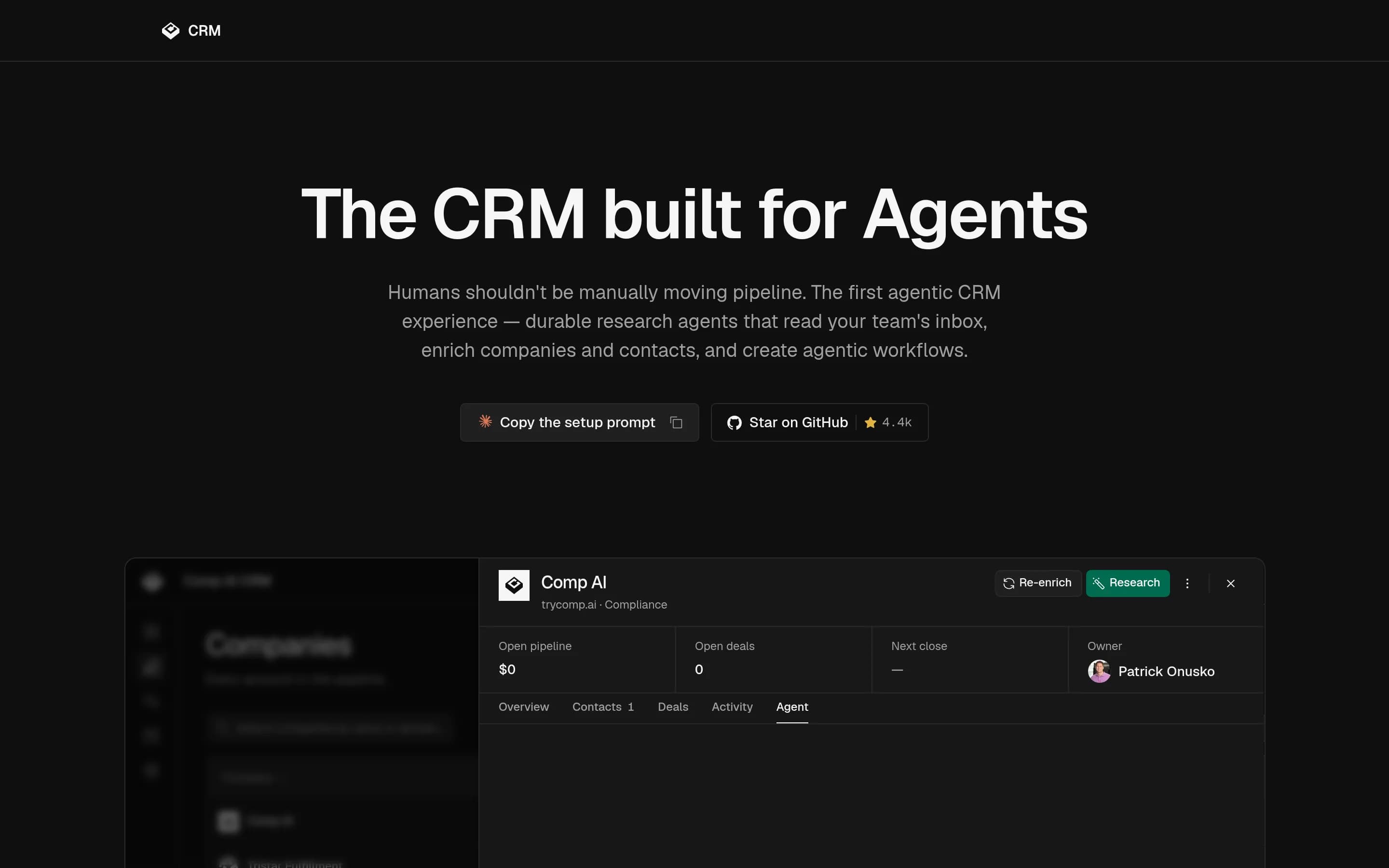
Comp AI CRM is the stronger choice for teams that require an MIT-licensed, self-hostable CRM and are prepared to operate an agent-centric, multi-service stack. It is not a simpler or manual-first substitute for Attio: its design centers on autonomous research and follow-up agents, and it deliberately uses a single-tenant model. Attio remains the better fit for teams needing the documented breadth of a managed revenue
What it does
Comp AI CRM is an open-source, agent-first customer relationship management system. It stores contacts, companies, and deals, presents pipeline data, and gives each record an Agent tab for durable conversations and visible research steps. Its agent can search CRM history, identify contacts, research people, enrich companies, record evidence-backed facts, write briefs, and schedule rechecks.
The repository documents Gmail and Calendar synchronization, optional LinkedIn and web research, evidence-ledger handling, mailbox configuration, authentication, and a single-tenant deployment model. It runs as separate Next.js frontend, NestJS API, and agent deployments backed by Postgres, with optional Redis and Vercel Blob. Local setup uses Bun and Docker Compose; production deployment is documented for independently hosted app, API, and agent services.
What it covers
- Contact, company, and deal records
- Sales pipeline tracking
- AI-assisted record questions
- Contact and company enrichment
- Email and calendar context
- Automated CRM workflows and follow-ups
What’s different
- No documented outreach sequences
- No documented call recording or transcription
- No documented revenue forecasting or rep reporting
- No documented custom-object model
- No documented multi-tenant organizations
- No documented Attio import or compatibility path
SSuiteCRM5,663
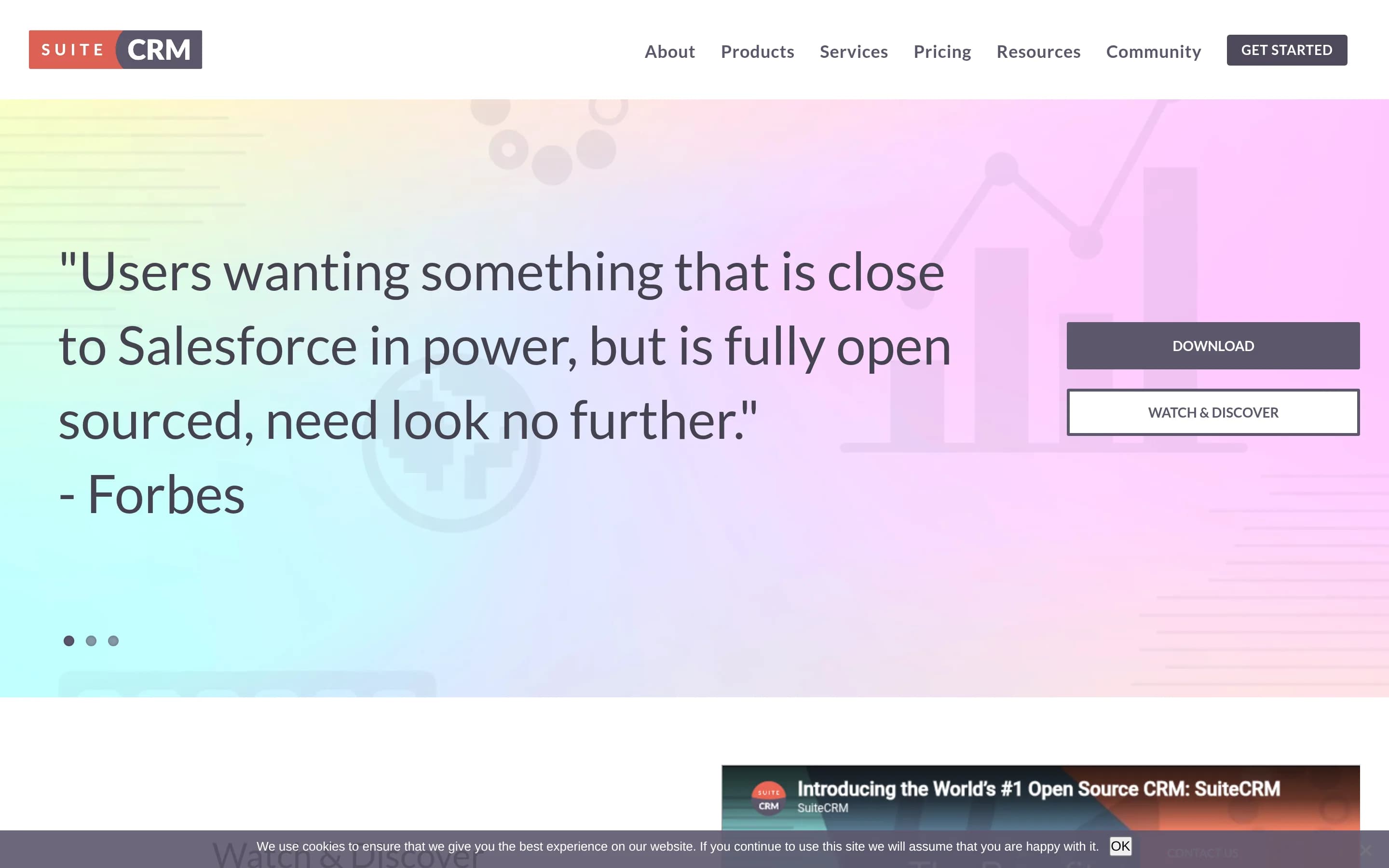
SuiteCRM is the stronger choice when source access, self-hosting, infrastructure control, and conventional CRM functions outweigh Attio’s managed, AI-centered revenue platform. Choose SuiteCRM for an open-source CRM you can operate and customize on your own infrastructure; choose Attio when you need documented native agents, synchronized customer context, outreach sequences, call intelligence, and its developer tool
What it does
SuiteCRM is an open-source, enterprise-ready customer relationship management application. Its documented scope includes accounts, contacts, leads, opportunities, cases, contracts, quotes, documents, reports, workflows, portals, multi-currency, and multi-language support.
SuiteCRM 7 can be deployed on Linux or Windows servers using Apache or IIS, PHP, and MySQL, MariaDB, or MSSQL. The README describes local testing and development, self-hosting on an internal network or public cloud, and fully managed hosting options. It is released under the AGPLv3 license.
What it covers
- Centralized customer records
- Flexible CRM data models
- Lead and opportunity management
- Workflow automation
- Reports and dashboards
- APIs and third-party integrations
What’s different
- No supplied evidence of native AI CRM agents
- No supplied evidence of AI-assisted search and actions
- No supplied evidence of native outreach sequences
- No supplied evidence of call recording and intelligence
- No supplied evidence of synchronized product and billing context
- No documented Attio import or compatibility path
EEver-gauzy4,327
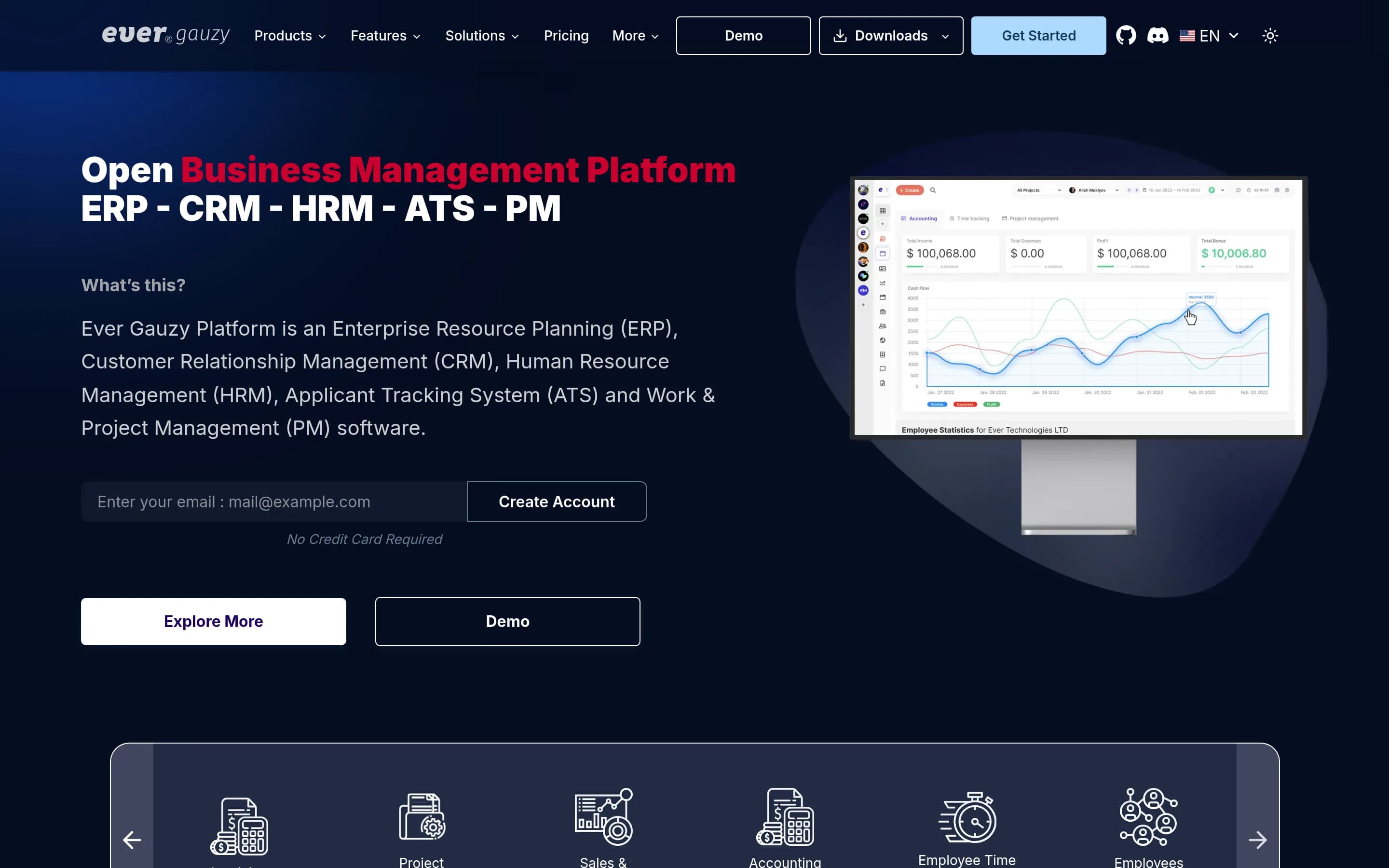
Ever Gauzy is a plausible Attio alternative when infrastructure control and a combined CRM/ERP/HR/project-management system matter more than Attio’s specialized revenue platform. It documents contacts, sales pipelines, reporting, permissions, APIs, and import/export, but the supplied evidence does not establish equivalents for Attio’s configurable object model, AI agents, enrichment, outreach sequences, or call-int —
What it does
Ever Gauzy is an open business-management platform covering ERP, CRM, HRM, ATS, sales, finance, inventory, and work and project management. Its documented project-related workflows include projects and tasks, schedules, team and organization management, goals and KPIs, dashboards, reports, insights, analytics, integrations, and time tracking with timesheets and activity tracking.
The platform is available as a browser-based web UI, server application, and Windows, macOS, and Linux desktop applications. Users can run it locally with Yarn or deploy it with Docker Compose; Kubernetes is recommended for production. It supports SQLite for demos and PostgreSQL or other databases for deployment, and is licensed under AGPL-3.0.
What it covers
- Contact and customer management
- Sales pipeline management
- Reports and analytics
- Roles and permissions
- APIs and integrations
What’s different
- Attio-style custom object model not documented
- Automated customer enrichment not documented
- AI CRM search and actions not documented
- Agent-driven scoring and routing not documented
- Personalized outreach sequences not documented
- Call recording and intelligence not documented
CCrm3,332
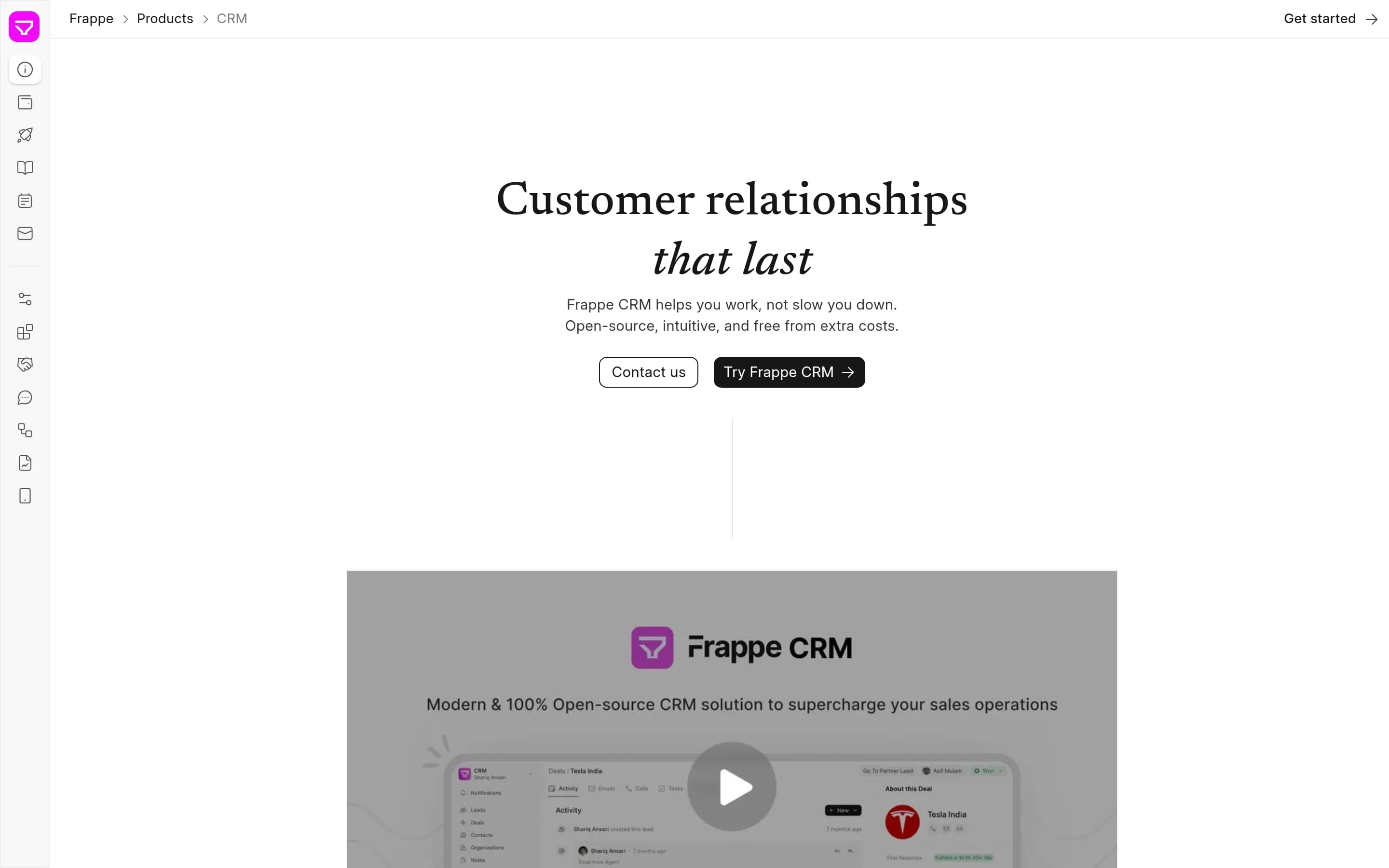
Frappe CRM is the stronger choice for teams that prioritize open-source, self-hosted infrastructure and conventional lead/deal workflows. Attio remains better suited to organizations that need its broader revenue platform—particularly synchronized enrichment, AI-assisted research and actions, outreach sequences, call intelligence, and advanced revenue reporting. Frappe documents customization, communications, and CRM
What it does
Frappe CRM is an open-source CRM for modern sales teams. It provides lead and deal pages that consolidate activities, comments, notes, and tasks, along with drag-and-drop Kanban views and custom filters, sorting, and columns for organizing sales work.
The README documents built-in Twilio and Exotel calling integrations, call recording, WhatsApp messaging, and ERPNext integration for invoicing and accounting. It is available through Frappe Cloud or can be self-hosted using the production deployment script, Docker Compose, or a local Frappe development setup. The application is licensed under AGPL-3.0.
What it covers
- Lead and deal tracking
- Custom fields and sales stages
- Kanban-style pipeline views
- Filtered and custom views
- Workflow and assignment automation
- Email and call activity tracking
- CRM integrations and APIs
What’s different
- No documented AI CRM assistant
- No documented automated data enrichment
- No documented outreach sequences
- No documented call transcription or summarization
- No documented agent run controls
- No documented equivalent revenue forecasting suite
- No documented Attio-specific migration tooling
DDjango-CRM2,385
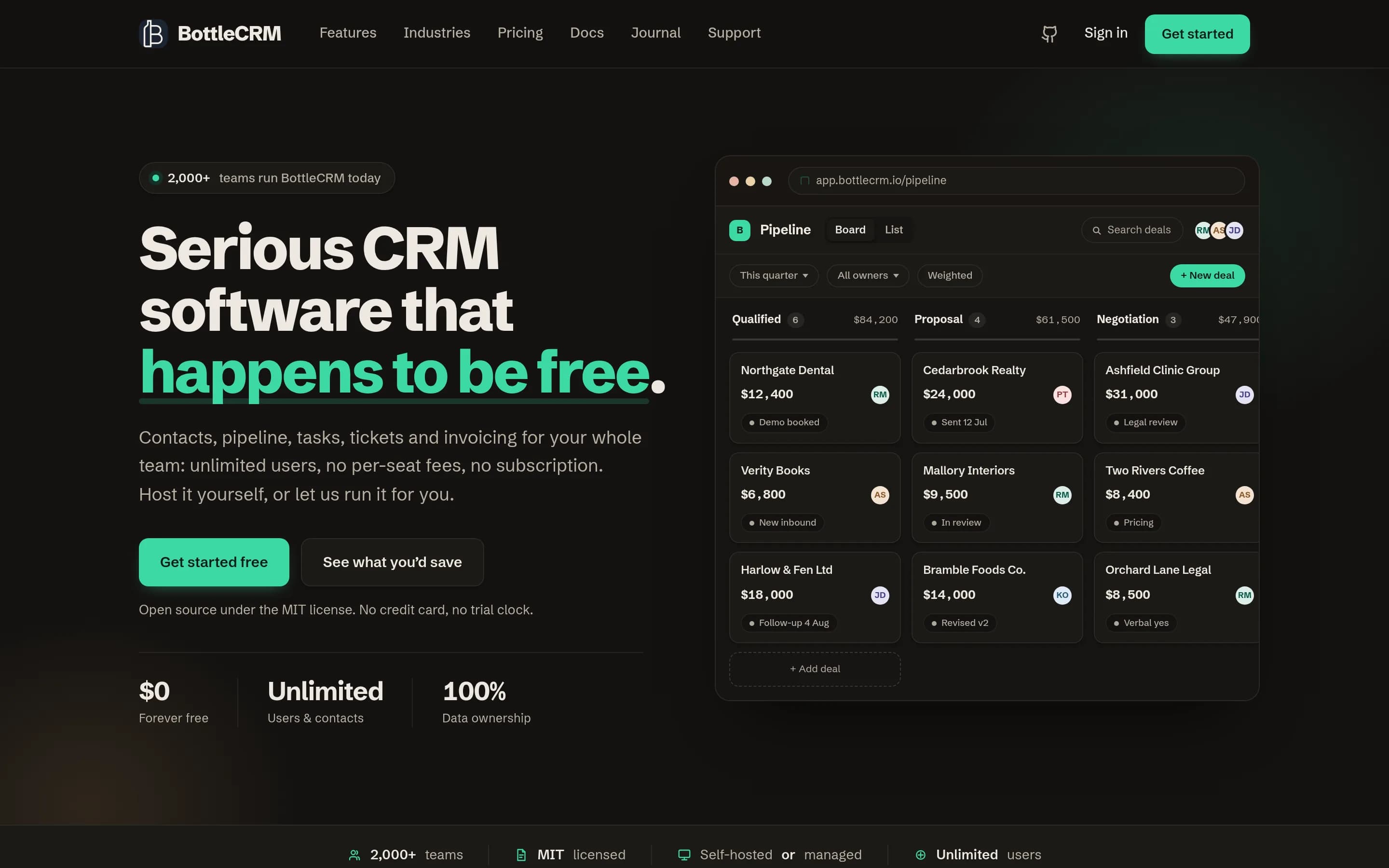
Django-CRM (presented in its current materials as BottleCRM) is the better fit for teams that prioritize MIT-licensed source access, self-hosting, infrastructure control, and conventional CRM modules such as leads, accounts, contacts, opportunities, tasks, tickets, and invoices. Attio remains the stronger choice for revenue teams that require its documented synchronized customer context, embedded AI research and CRM2
What it does
BottleCRM is an open-source CRM for startups and enterprises that manages the customer lifecycle across leads, accounts, contacts, opportunities, support tickets, tasks, and invoices. It provides a SvelteKit web application, a native Flutter mobile application, and a Django REST API backed by a shared PostgreSQL database.
The product supports multi-tenant deployments with PostgreSQL Row-Level Security, role- and organization-aware API access, helpdesk workflows with SLA timers, approvals, escalations, macros, and a knowledge base. It can be run on user-controlled infrastructure using Docker Compose or manual installation, and is released under the MIT license.
What it covers
- Lead, contact, and account records
- Deal and opportunity pipelines
- Custom fields on CRM entities
- Pipeline forecasts and dashboards
- Role-aware API access
- API-based record search and updates
What’s different
- No documented Attio-specific data migration
- No documented synchronized customer-context layer
- No documented automated data enrichment
- No documented native outreach sequences
- No documented call recording or transcription
- No documented Attio-style workflow branching, loops, or reruns
- No documented MCP server or TypeScript App SDK
RRelaticle1,511
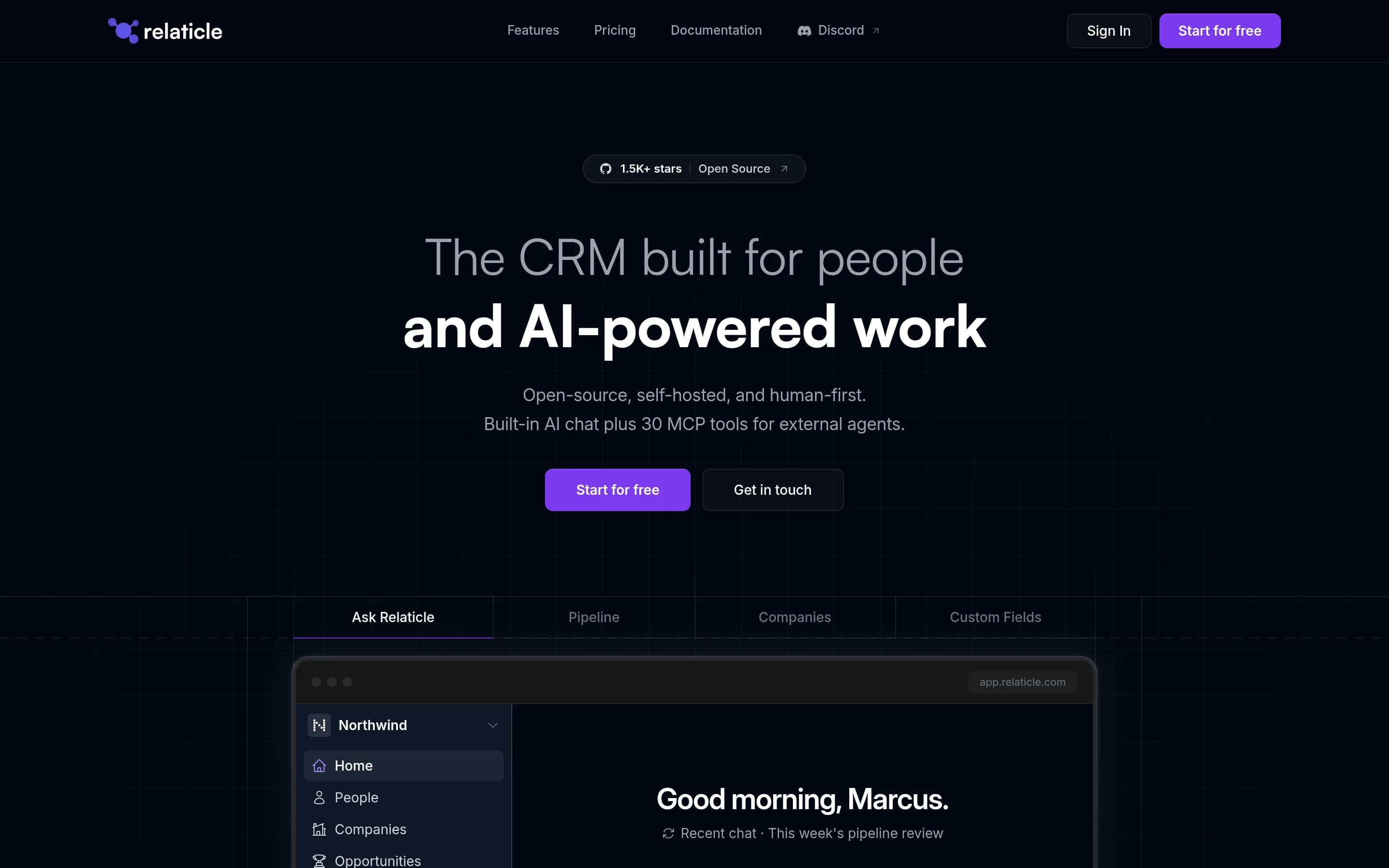
Choose Relaticle when source access, self-hosting, infrastructure control, and a conventional CRM covering people, companies, opportunities, tasks, custom fields, API access, and AI-agent integration matter most. Choose Attio when you need the broader documented revenue platform—especially synchronized and enriched customer context, workflow automation, outreach sequences, call intelligence, or detailed revenue-team/
What it does
Relaticle is an open-source CRM designed for developer-led teams, AI-focused startups, and small and medium businesses. Its documented workflow centers on managing contacts, companies, and opportunities through a modern graphical interface, with multi-team isolation and team-scoped data.
The product provides 22 custom field types, entity relationships, conditional visibility, per-field encryption, REST CRUD access, schema discovery, and an MCP server exposing 30 CRM tools for AI agents. It is built with Laravel, Filament, Livewire, PHP, PostgreSQL, and Redis support.
Relaticle is self-hostable under the AGPL-3.0 license. The repository documents local installation through Composer and provides Docker and manual deployment instructions in its self-hosting guide.
What it covers
- Contact, company, and opportunity records
- Customizable fields and entity relationships
- Configurable sales pipeline stages
- AI-assisted CRM interaction
- REST API and MCP connectivity
- Role-scoped team access
What’s different
- No documented email, calendar, product, or billing synchronization
- No documented automated data enrichment
- No documented branched revenue-workflow builder
- No documented outreach sequences
- No documented call recording, transcription, or analysis
- No documented forecasting or rep-performance reporting
- No documented Attio-specific importer
AAtomic-crm1,199
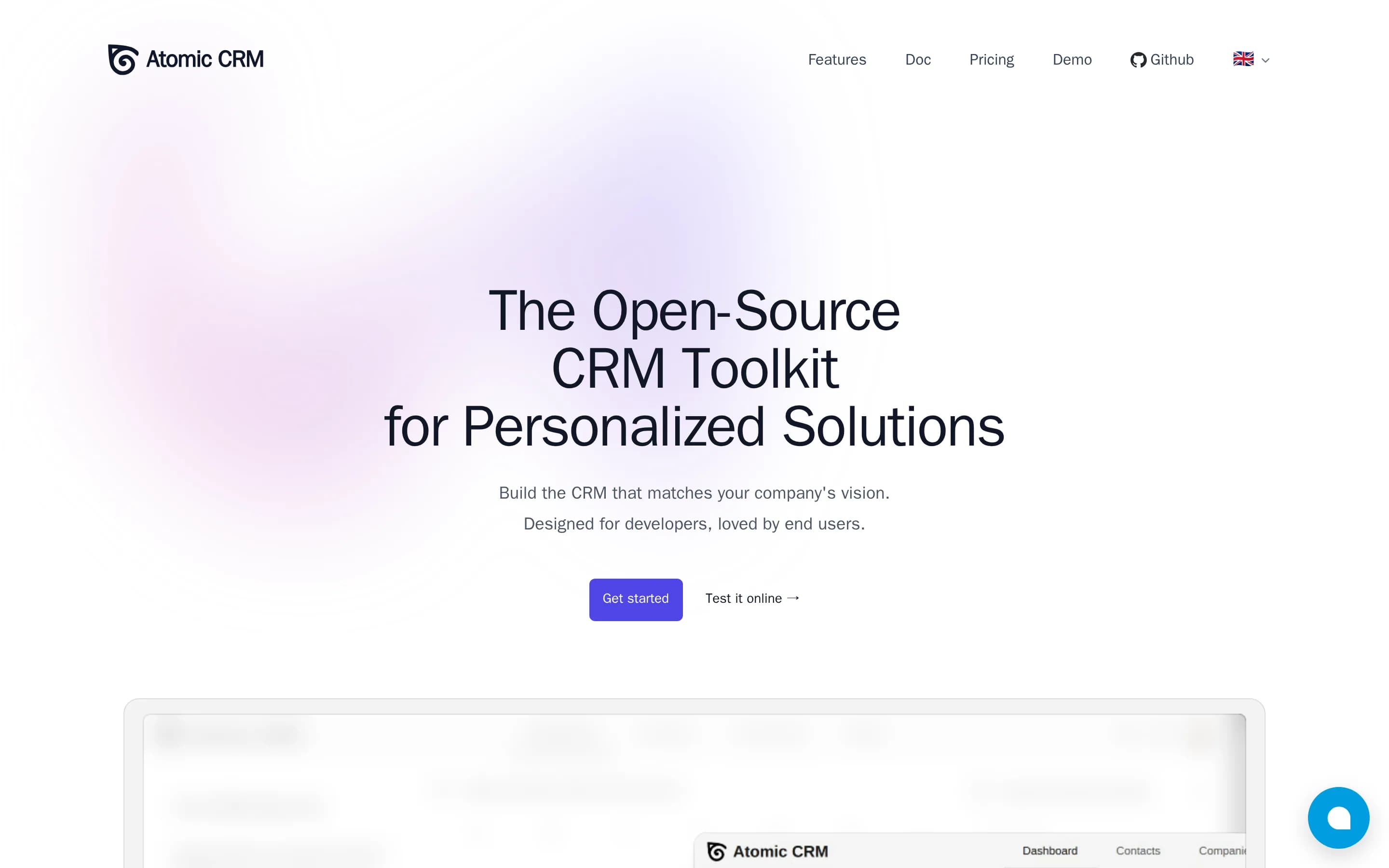
Atomic CRM is a direct open-source CRM alternative with contact management, customizable fields, activity history, and Kanban sales-deal tracking. Its documented coverage is narrower than Attio's, lacking evidence for synchronized enrichment, advanced revenue workflows, AI CRM actions, outreach sequences, call intelligence, and reporting.
What it does
Atomic CRM is a full-featured, open-source CRM for organizing contacts, capturing communications as notes, recording activities, creating tasks and reminders, and managing sales deals in a Kanban pipeline. It supports data import and export, aggregated activity history, custom fields, theming, component replacement, and API-based integrations.
The application is built with React, shadcn-admin-kit, and Supabase. Users can test it through the documented online demo or run the complete project locally with Node, Make, and Docker; local startup provides the Vite frontend, Supabase services, and a Postgres database. Authentication can use Google, Azure, Keycloak, or Auth0.
What it covers
- Contact and CRM record management
- Sales deal and pipeline tracking
- Custom fields and configurable records
- Activity and communication history
- Tasks and reminders
- API integration
What’s different
- Customer data synchronization and enrichment
- Revenue workflows and agents
- AI CRM search and actions
- Personalized outreach sequences
- Call intelligence
- Revenue reporting
DDjango-crm610
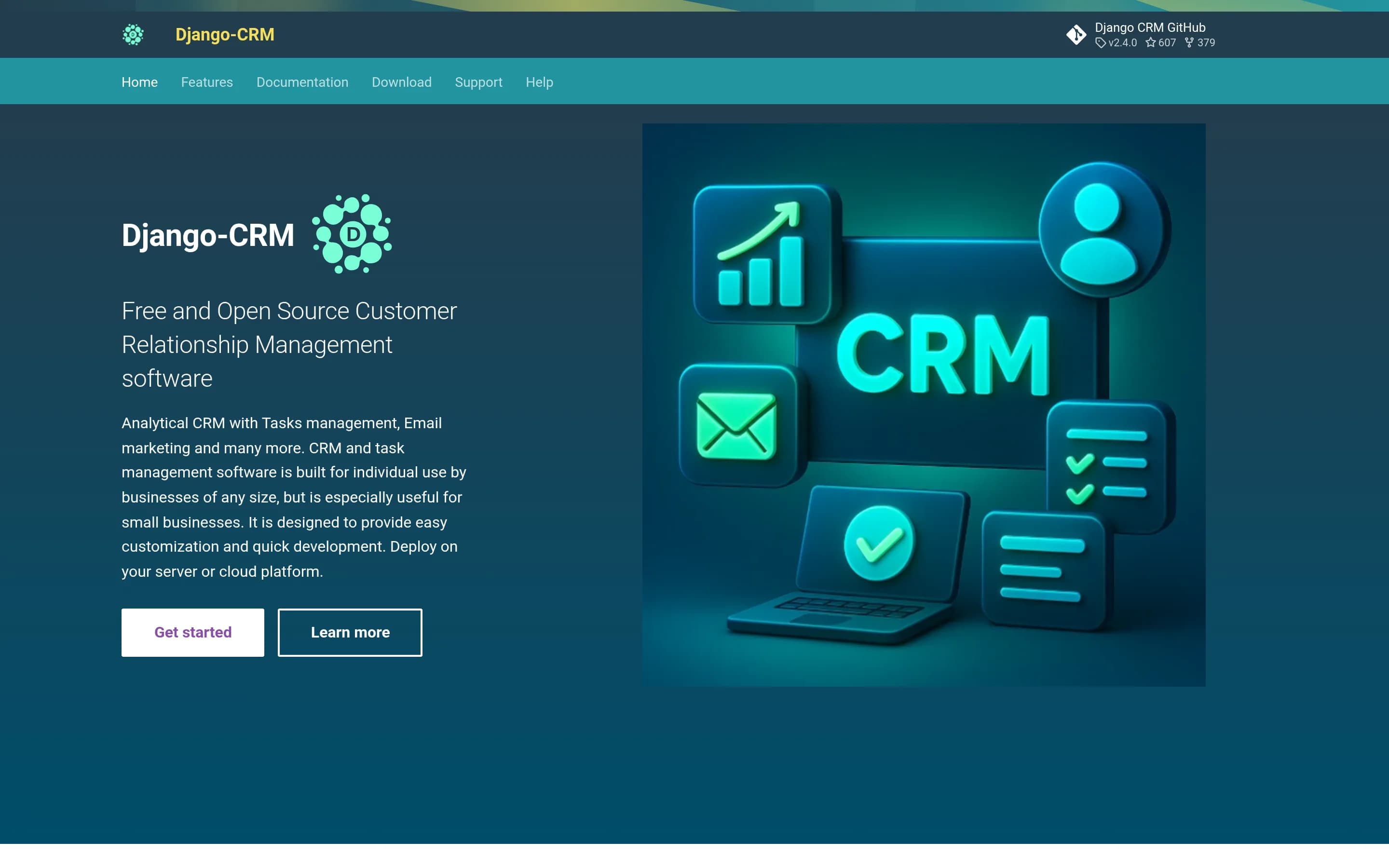
Choose Django-crm when infrastructure control, source-level Python/Django customization, and conventional CRM, task, email-marketing, and analytics functions matter more than Attio’s configurable data model and AI-centered revenue tooling. Choose Attio when you need native enrichment, workflow agents, AI search and actions, personalized sequences, call intelligence, or broader developer-platform capabilities; thoseِں
What it does
Django-CRM is an open-source customer relationship management system for businesses and freelancers. It manages leads, opportunities, companies, contacts, deals, products, payments, requests, tasks, projects, and subtasks, with interconnected CRM models supporting sales workflows and team assignments.
The platform includes a Django Admin web interface with filtering, sorting, search, adaptive desktop and mobile templates, and object-level permissions. Its mailing features support SMTP, IMAP, OAuth 2.0, synchronized correspondence, campaigns, newsletters, templates, and contact segmentation. Analytics covers sales funnels, income summaries, lead sources, and request summaries.
Django-CRM is built with Python and Django and is designed for self-hosted or on-premise deployment. SQLite works for evaluation, while documented production database options include MySQL and PostgreSQL. It is AG
What it covers
- Lead, contact, company, and deal records
- Sales pipeline and forecasting
- Email-linked CRM correspondence
- Outbound email campaigns
- Role-based data access
- Sales analytics and funnel reports
- Search, filtering, and sorting
- Extensibility and third-party integration
What’s different
- No documented AI CRM search or actions
- No documented enrichment and routing agents
- No documented call transcription or intelligence
- No documented Attio-style custom-object builder
- No documented product, billing, and calendar context synchronization
- No documented MCP server or TypeScript App SDK
- No documented Attio migration tooling
LLaravel-crm23,685
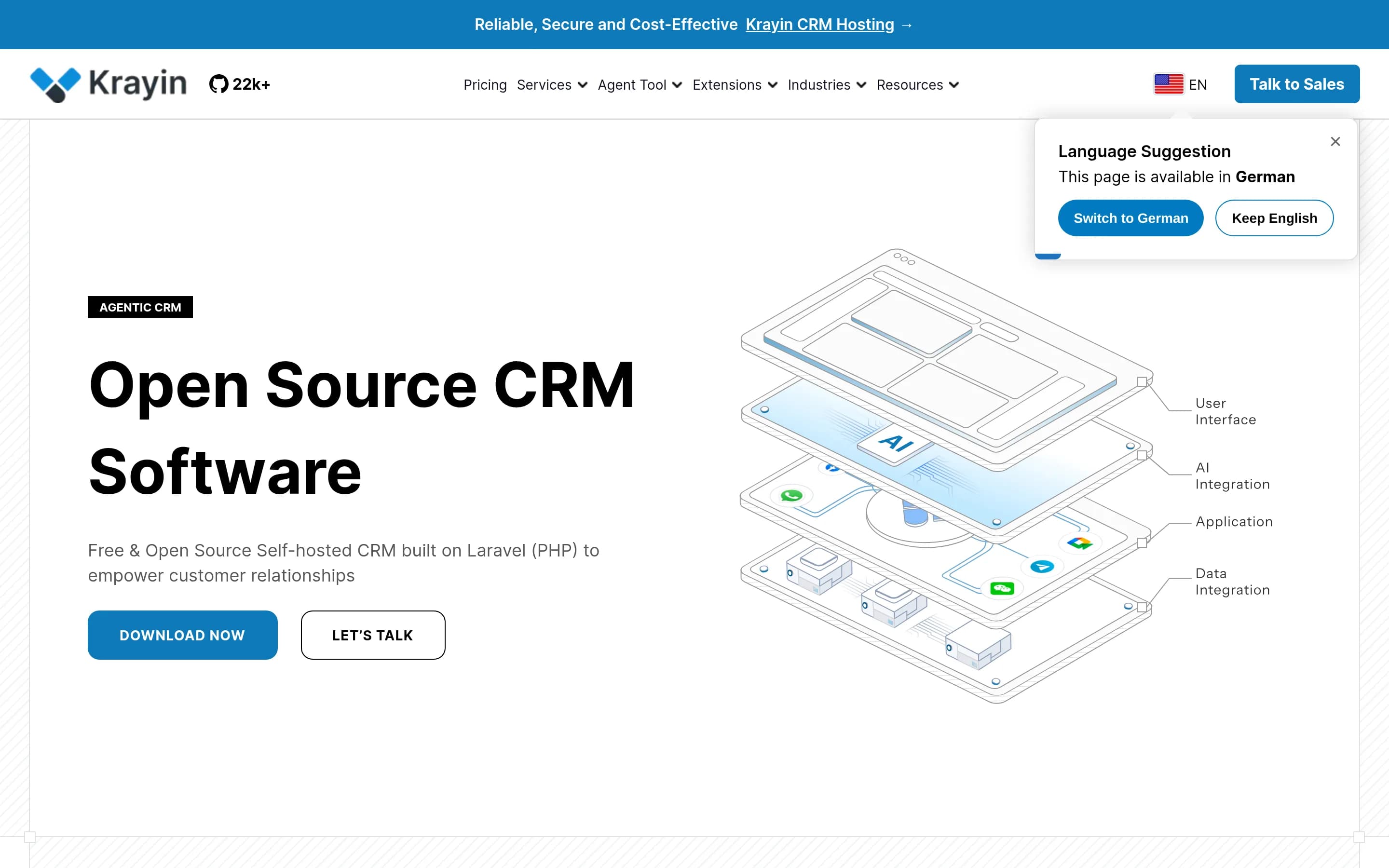
Laravel-crm (Krayin CRM) is the stronger choice for teams prioritizing source access, self-hosting, and a conventional customer/lead/sales CRM. Attio remains the better fit for teams that depend on its broader revenue platform: synchronized and enriched context, configurable objects, governed agent workflows, call intelligence, and deeper revenue reporting. The supplied evidence supports overlapping CRM fundamentals,
What it does
Krayin CRM is a free, open-source CRM application for SMEs and enterprises, focused on customer, lead, and sales management across the customer lifecycle. The README documents an admin panel, dashboard, custom attributes, modular architecture, and email parsing via SendGrid.
The application can be installed on a server or locally with Laravel, PHP, Composer, and MySQL, and supports Apache or NGINX. It includes documented commands for installation and local serving, plus Docker installation documentation. A hosted cloud offering and a multi-tenant SaaS extension are also referenced.
What it covers
- Customer and contact records
- Lead and sales management
- Deal or opportunity tracking
- Custom fields or attributes
- Sales activities
- Email capabilities
- Sales reporting at a general level
- Developer-oriented extensibility
What’s different
- Attio-equivalent context synchronization and enrichment not documented
- Attio-equivalent governed agent workflows not documented
- AI search with permission-aware record actions not documented
- Native call recording and transcription not documented
- Buying-signal and blocker extraction not documented
- Attio-equivalent forecasting and risk reporting not documented
IIdurar-erp-crm8,666
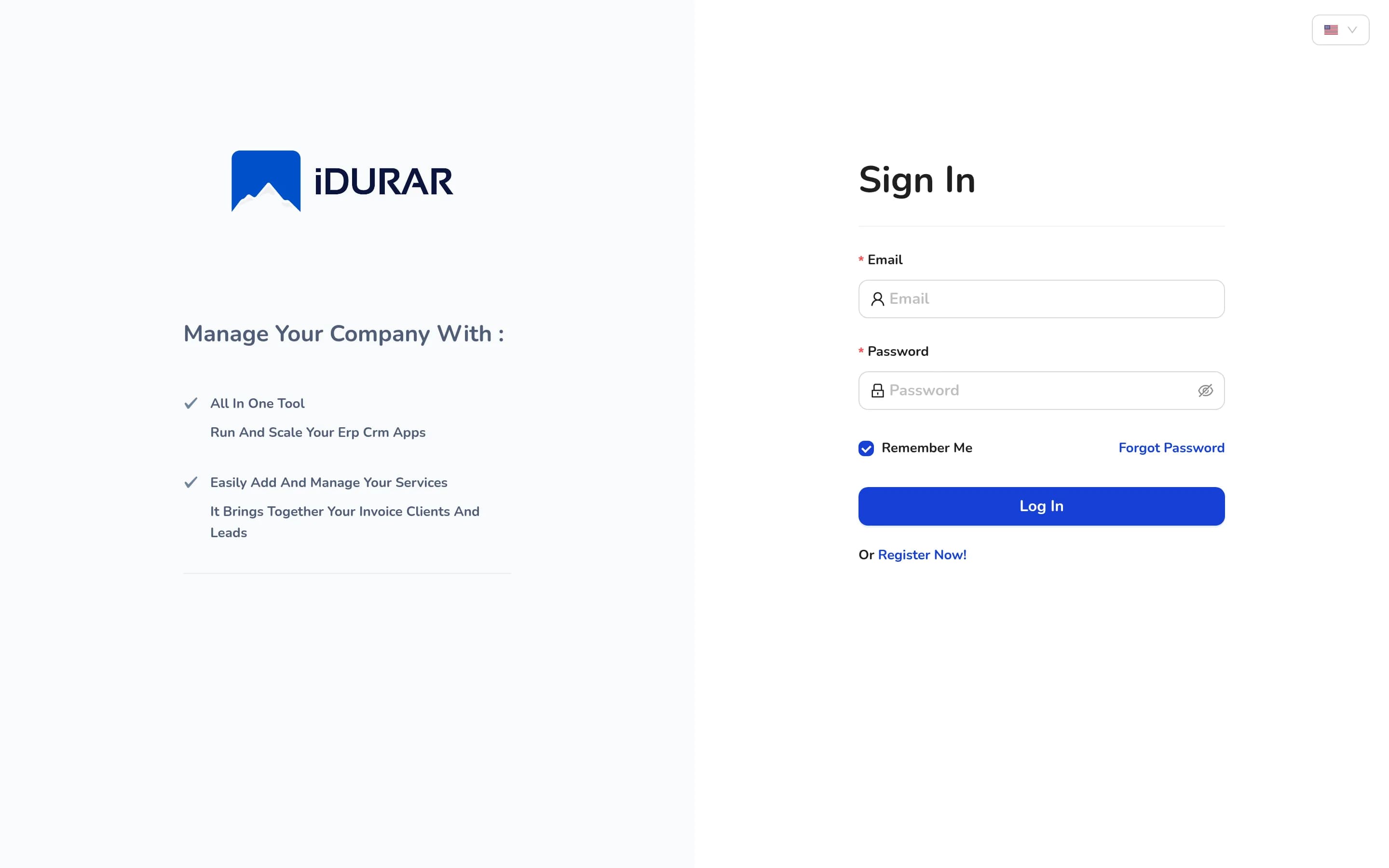
Choose Idurar-erp-crm when self-hosting, source access, customer management, invoicing, quotes, payments, and accounting are the priority. Choose Attio when the CRM must support configurable objects, deal pipelines, synchronized customer context, advanced revenue automation, AI-assisted work, outreach, call intelligence, or reporting; those capabilities are not documented for Idurar in the supplied sources.
What it does
IDURAR is an open-source ERP and CRM application built with Node.js, Express.js, MongoDB, React, Ant Design, and Redux. Its documented workflows include customer management, invoice management, payment management, and quote management, with the broader project described as covering inventory, accounting, and HR functions.
The repository contains the product and documents a local deployment path: clone the repository, configure a MongoDB database and environment file, install backend and frontend dependencies, run the setup script, and start both servers. It also identifies a self-hosted enterprise version and is released under AGPL-3.0.
What it covers
- Customer record management
- CRM functionality
What’s different
- Deal pipelines not documented
- Custom CRM objects and associations not documented
- Customer-context synchronization and enrichment not documented
- Triggered revenue workflows and agents not documented
- AI CRM search and actions not documented
- Outreach sequences not documented
- Call recording and intelligence not documented
- Revenue forecasting and performance reporting not documented
- MCP, App SDK, and comparable extension tooling not documented