CCraft
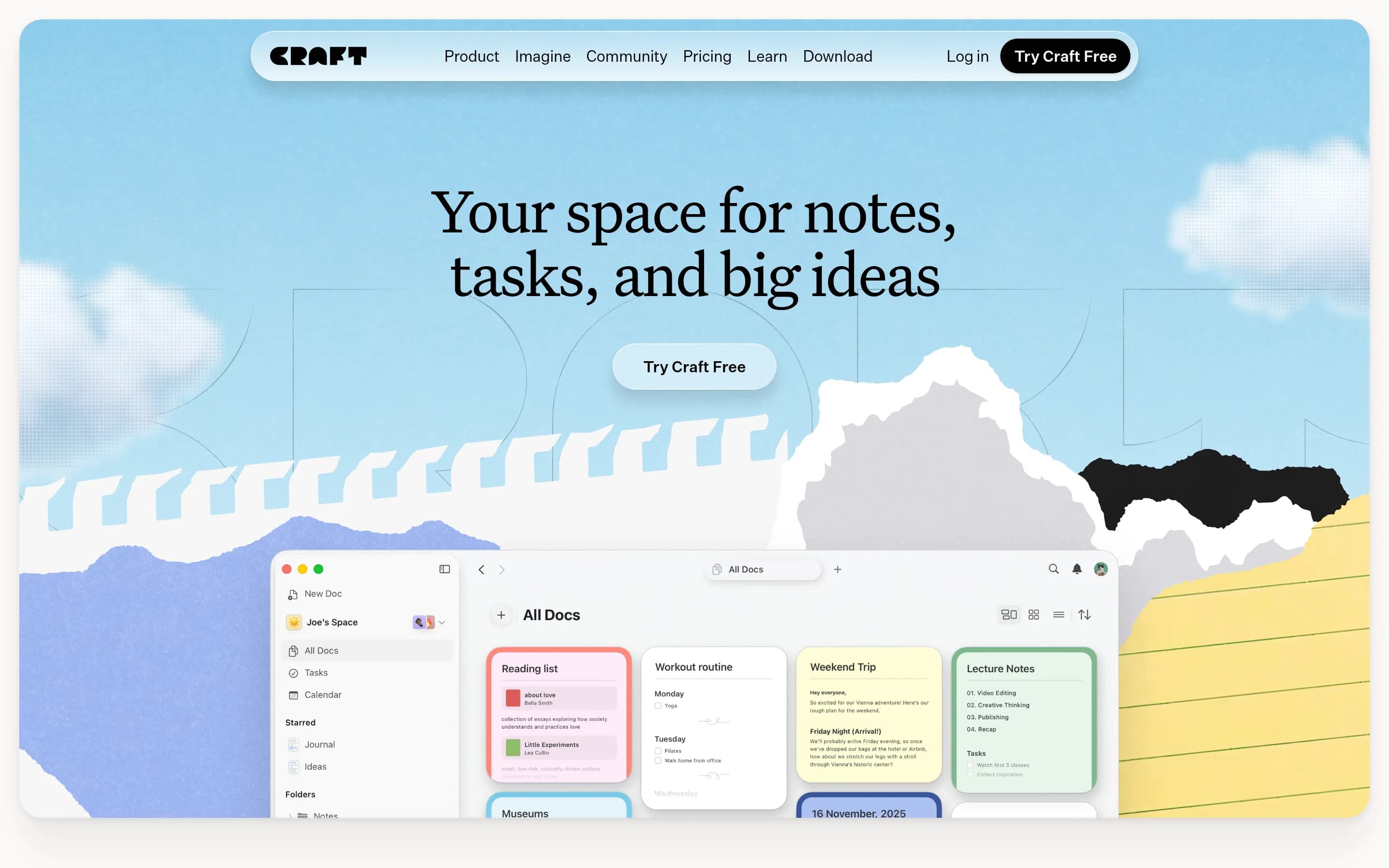
Craft is a cross-device productivity app for capturing notes and refining them into structured, shareable documents. It also brings tasks, calendars, daily notes, whiteboards, and project-planning materials into the same workspace.
Why people leave Craft
Someone might seek an alternative if Craft’s broad combination of notes, documents, tasks, calendars, whiteboards, and planning tools does not match their preferred workflow. A user focused primarily on rigorous project delivery may want more specialized support for milestones, resource planning, dependencies, or operational reporting. Conversely, someone who only needs straightforward note-taking may prefer a narrower product with fewer adjacent planning modules.
Craft emphasizes taking an idea from a quick note to a polished, shareable document. That document-centered model may not suit people whose work is organized mainly around databases, formal task hierarchies, software issues, or highly structured business processes. Teams with established project-management conventions could therefore look for an alternative built around project boards and delivery controls rather than documents supplemented by tasks and timelines.
Platform and ecosystem requirements can also motivate a change. The crawled page lists apps for iPhone, iPad, Mac, Windows, Vision Pro, and Android, along with API and MCP connections. Even with that coverage, an organization may need a different integration, automation model, administrative setup, or deployment option for its existing systems. Prospective users may also compare how alternatives handle migration, interoperability, and long-term access to their documents before committing substantial knowledge to one workspace.
Finally, cost and usage patterns can matter. Craft advertises a free option described as suitable for occasional weekly use and notes that premium features are available. Individuals or teams with heavier usage may compare paid plans with alternatives that package features differently or offer a more suitable free or open-source model. Users who prioritize self-hosting, source-code access, or deeper control over storage and customization may specifically seek an open-source replacement, since those capabilities are not established by the supplied page.
10 Best Open Source Craft Alternatives (Ranked)
Each alternative is evaluated for core feature coverage, deployment options, licensing, project health, and overall fit. The ranking prioritizes how closely a tool matches Craft's primary workflows, using popularity only as a secondary signal.
SSiyuan45,825
Choose SiYuan when self-hosting, local data control, Markdown editing, and block-level knowledge linking matter more than an integrated planning suite. Stay with Craft when the primary workflow is turning notes into polished shared documents alongside calendars, tasks, reminders, daily notes, and whiteboards; those adjacent capabilities are not documented for SiYuan in the supplied sources.
What it does
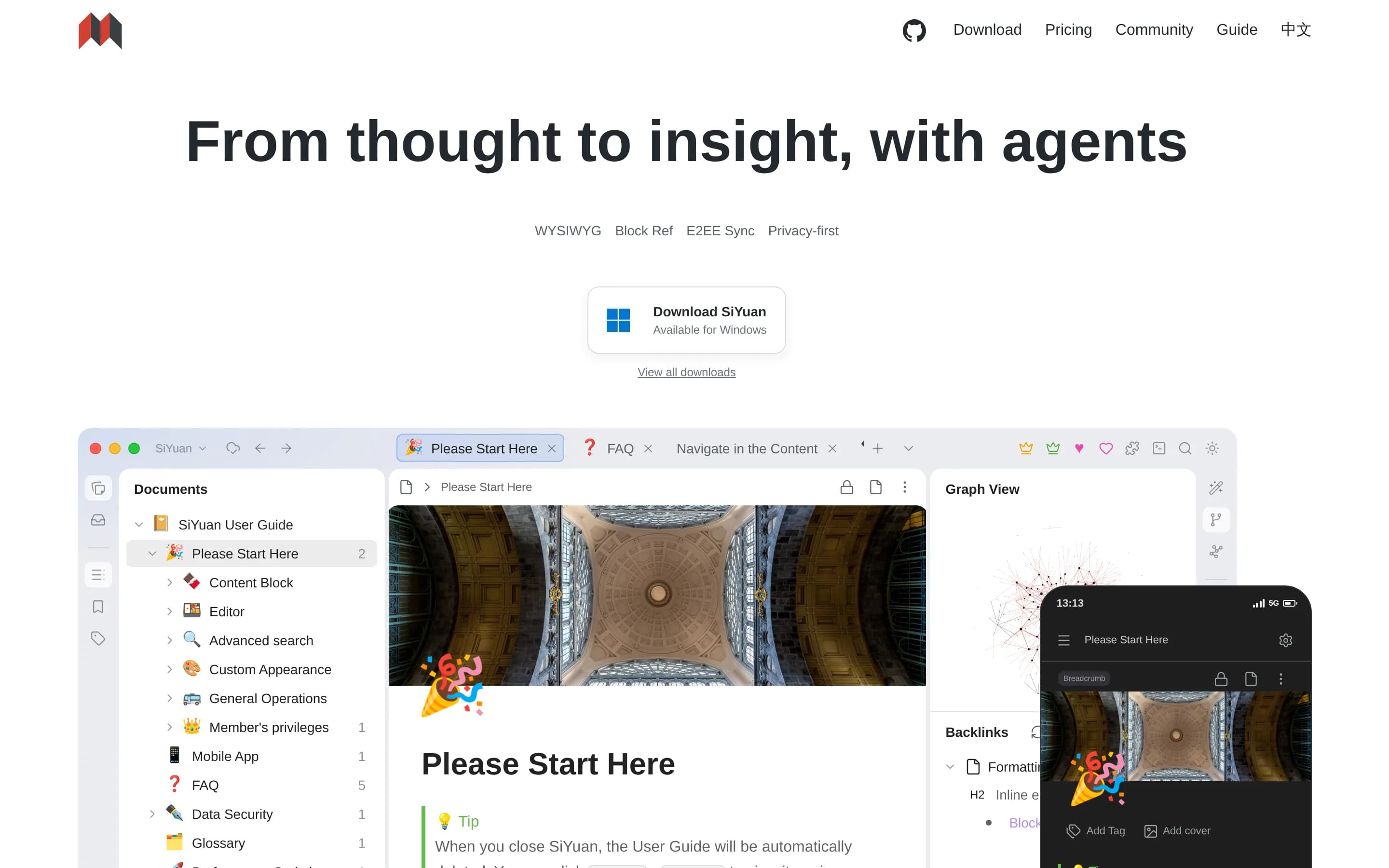
SiYuan is an open-source, privacy-first knowledge-management system built around block-level references, two-way links, Markdown WYSIWYG editing, and large documents. Users can create and organize notes, query content with SQL embeds, clip web content, annotate PDFs, and create tables, charts, flowcharts, and other embedded content.
The software includes AI writing and question-and-answer chat through the OpenAI API, templates, flashcards, OCR, export to Markdown, PDF, Word, and HTML, and multi-tab split-screen editing. It is available as desktop and mobile applications and can also be deployed through Docker or Docker Compose, with browser access to a server-hosted workspace.
What it covers
- Structured document editing
- Mobile apps on Android and iOS
- Reusable templates or snippets
- External API access
What’s different
- No documented calendar planning
- No documented daily journal workflow
- No documented tasks or reminders
- No documented whiteboards
- No documented MCP connection
- No documented Craft importer
ZZennotes2,308
Choose ZenNotes if you want an MIT-licensed, self-hostable, keyboard-first Markdown workspace with local file ownership, Vim controls, tasks, daily notes, templates, diagrams, and MCP access. Keep Craft if your priority is turning notes into polished shareable documents or using its broader calendar, whiteboard, reminder, Android, and Vision Pro coverage; equivalent ZenNotes coverage is not documented. The centraly
What it does
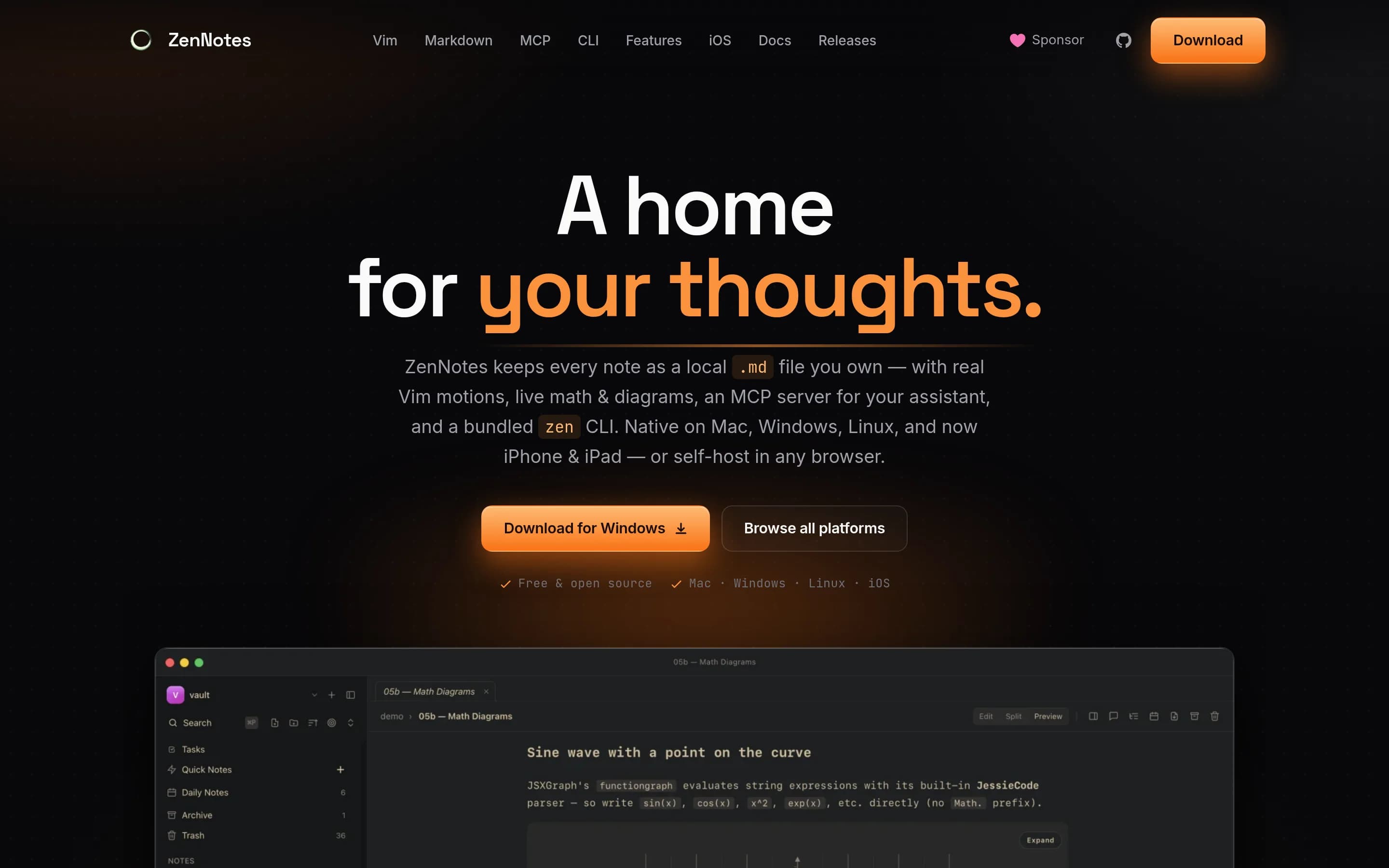
ZenNotes is a keyboard-first Markdown notes application that stores notes as ordinary files in a user-selected vault. Its documented workflows include quick capture, editing, split and preview modes, Vim navigation, folders, tags, search, archive and trash, tasks, daily and weekly notes, diagrams, mathematical notation, and local asset handling.
The product is distributed as an Electron desktop app for macOS, Windows, and Linux, and also provides a self-hosted web app backed by a Go server. Docker deployment is documented with mounted vault and data directories, local authentication, configurable ports, and browser access on a LAN or home server. A command-line companion and MCP server are included for terminal and tool integrations.
What it covers
- Markdown-oriented note creation and organization
- Daily-note workflows
- Tasks alongside notes
- Templates for new notes
- MCP integration
- Diagram or visual-content support
What’s different
- Polished shareable-document workflow not documented
- General calendar-planning parity not documented
- Reminder support not documented
- Whiteboard parity not documented
- Android app not documented
- Vision Pro app not documented
NNote-gen12,636
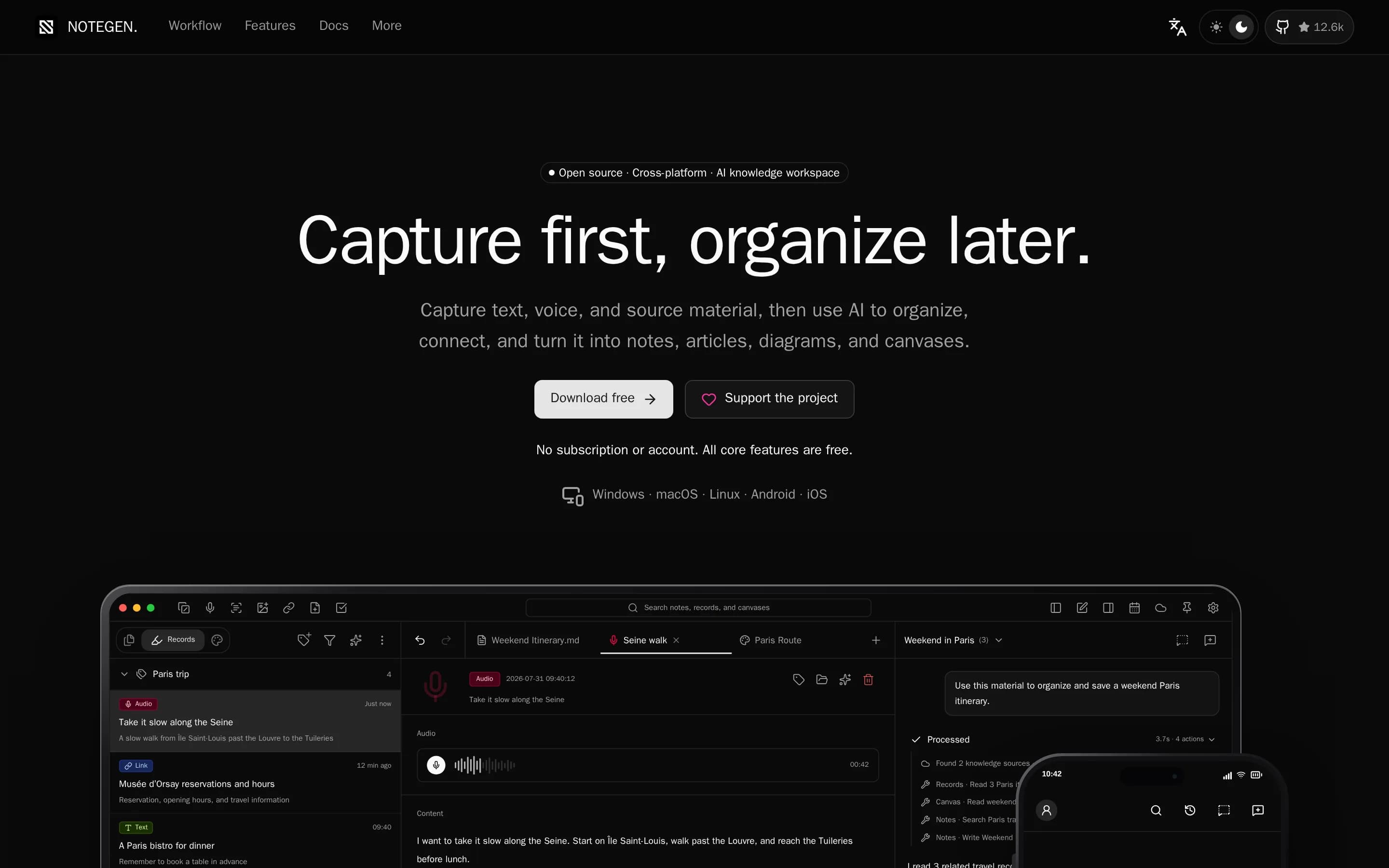
NoteGen is the stronger choice for users who prioritize open-source code, local-first storage, portable Markdown, configurable AI, and self-controlled sync. Craft remains the better fit for teams that need its broader integrated workflow—especially calendar planning, daily notes, reminders, polished sharing, or established apps beyond NoteGen’s current alpha/beta releases. NoteGen overlaps with Craft’s capture-to-idi
What it does
NoteGen is a local-first Markdown application for capturing thoughts, voice recordings, screenshots, images, links, files, and todos before organizing them into structured notes. Users can filter records by tag, time, or type, select related material, apply a template or instruction, and produce summaries, reports, articles, or other Markdown structures for continued editing.
The editor supports visual and source Markdown modes, tables, task lists, code, math, diagrams, search and replace, attachments, export, printing, history, and workspace management. It also provides AI chat and writing assistance, OCR, audio and image capabilities, searchable knowledge bases with semantic and local retrieval, MCP servers, agent tools, and an editable canvas for diagrams, mind maps, timelines, drawings, and charts.
Notes remain ordinary Markdown files in a chosen workspace. The application is local
What it covers
- Quick capture followed by structured writing
- Tasks or todos alongside captured material
- Templates for organizing documents
- Visual canvas and diagram workflows
- MCP-based extensions
- Desktop and mobile applications
- Search across notes and source material
- Document export tools
What’s different
- No documented calendar planning
- No documented daily-notes or journal workflow
- No documented reminder system
- No equivalent polished sharing workflow documented
- No Vision Pro application documented
- No stable-status desktop or mobile release documented
- No Craft-specific importer documented
AAlexandrie2,326
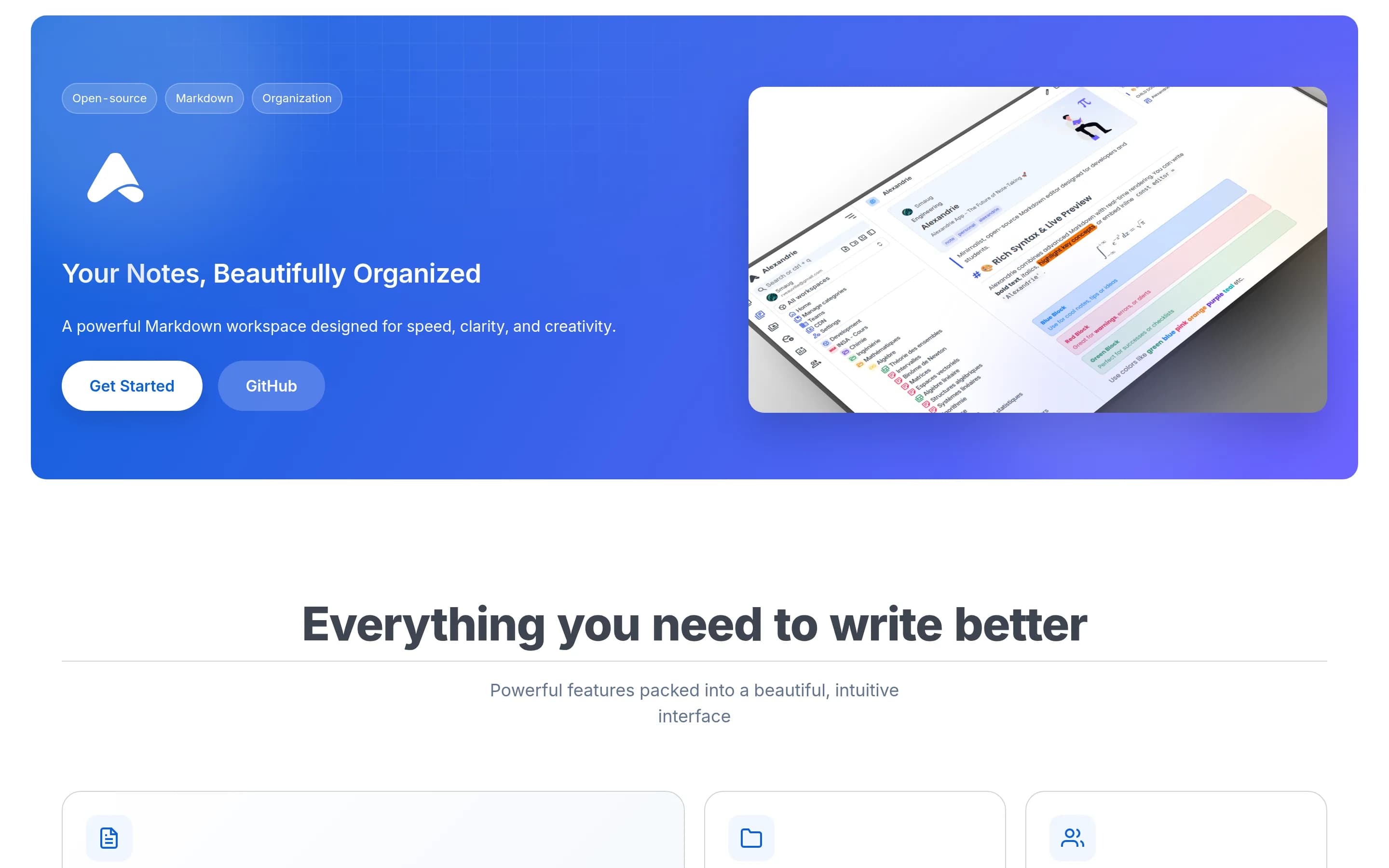
Alexandrie is a credible replacement for Craft when the priority is a self-hosted, offline-first Markdown knowledge base with team permissions, search, sharing, and Kanban boards. Choose Alexandrie for infrastructure and data control; choose Craft when its broader workflow—native cross-device apps, calendars, daily notes, reminders, whiteboards, and API/MCP connections—is essential.
What it does
Alexandrie is an open-source, self-hosted wiki and knowledge-management platform for teams and individuals. Users create and maintain nested documents with an extended Markdown editor supporting LaTeX, custom containers, checkboxes, snippets, speech-to-text, and embedded diagrams. Documents can be organized across teams, workspaces, categories, and hierarchical nodes.
The platform provides full-text search with highlighted results, offline-first PWA access and synchronization, public links, granular workspace and node permissions, integrated Kanban boards, media previews, and ZIP import/export. It supports OIDC single sign-on, automated backup and restore workflows, and S3-compatible storage. Deployment is documented through Docker Compose, with the application available locally at port 8200.
What it covers
- Structured notes and documents
- Public or permission-based sharing
- Templates and reusable snippets
- Tasks alongside documentation
- Cross-device access, with different client models
- Offline access and synchronization
What’s different
- No documented calendar planning
- No documented daily-note or journal workflow
- No documented task reminders
- No documented whiteboards
- No documented API or MCP connections
- No released native desktop or mobile apps
TTrilium37,438
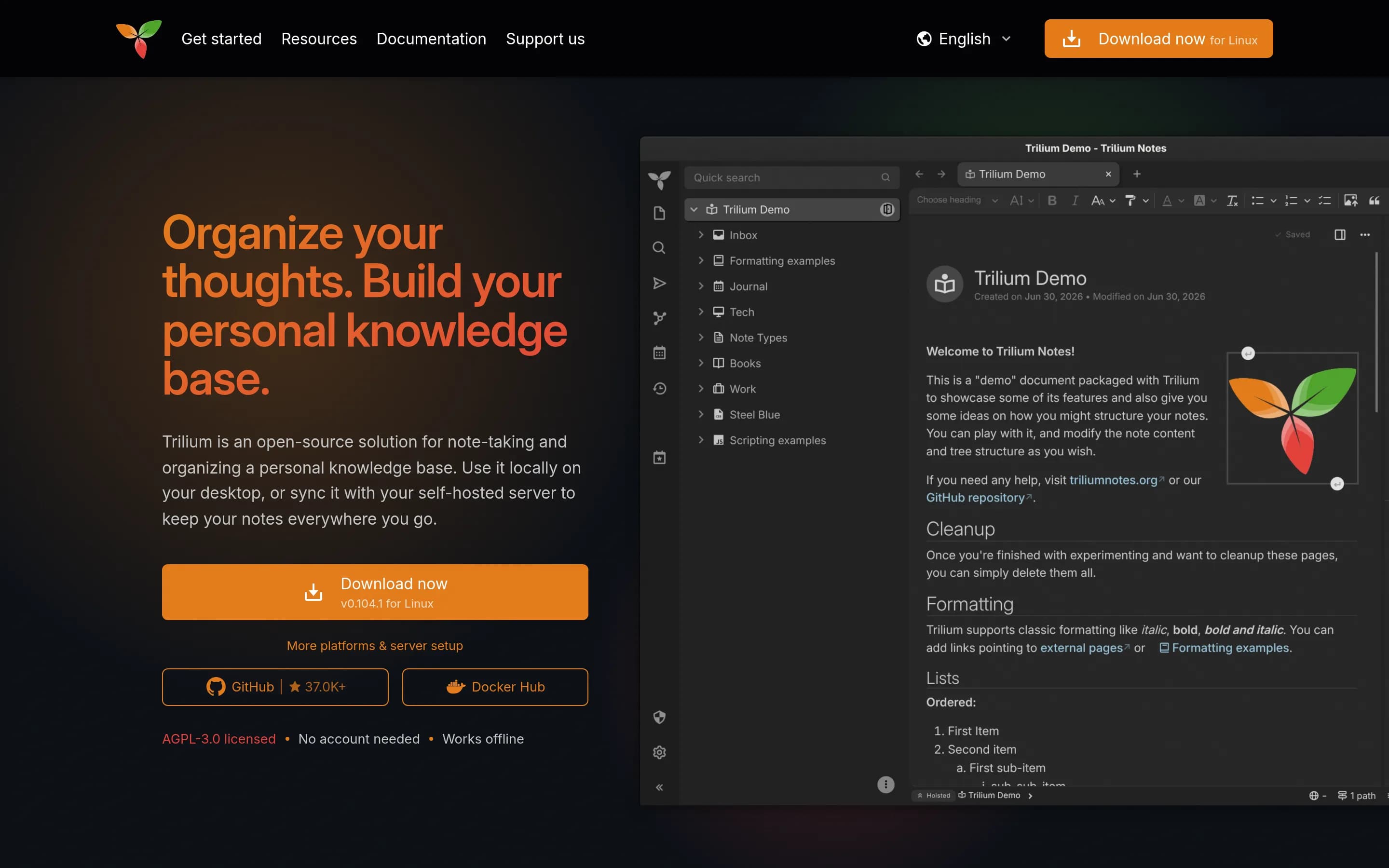
Choose Trilium if you want an AGPL-licensed, self-hostable personal knowledge base centered on deep note hierarchies, multiple note types, scripting, and server-controlled synchronization. Keep Craft if polished note-to-document workflows, first-party mobile apps, integrated tasks and reminders, or MCP connectivity are important: the supplied Trilium sources document publishing, calendars, canvases, templates, and a
What it does
Trilium Notes is a free, open-source, cross-platform hierarchical note-taking application designed for large personal knowledge bases. Users organize rich WYSIWYG notes in arbitrarily deep trees, place notes in multiple locations, edit tables, images, mathematics, and source code, search full text, version notes, and publish notes publicly.
The application also documents note attributes, scripting, REST automation, encryption, synchronization through a self-hosted sync server, relation and link maps, mind maps, geographic maps, Excalidraw-based canvases, web clipping, and Markdown or Evernote import and export. It provides desktop binaries for Windows, macOS, and Linux, a browser-accessible server interface, mobile web access, and Docker-based server installation.
What it covers
- Rich-text note editing
- Shareable or publicly published notes
- Calendar-based organization
- Templates for reusable notes
- Canvas-style diagramming
- Cross-device access through synchronization
- External automation through an API
What’s different
- No documented built-in tasks and reminders
- No documented MCP connections
- No documented first-party iPhone or iPad app
- No documented Vision Pro app
- No documented Craft-specific importer
DDocs16,725
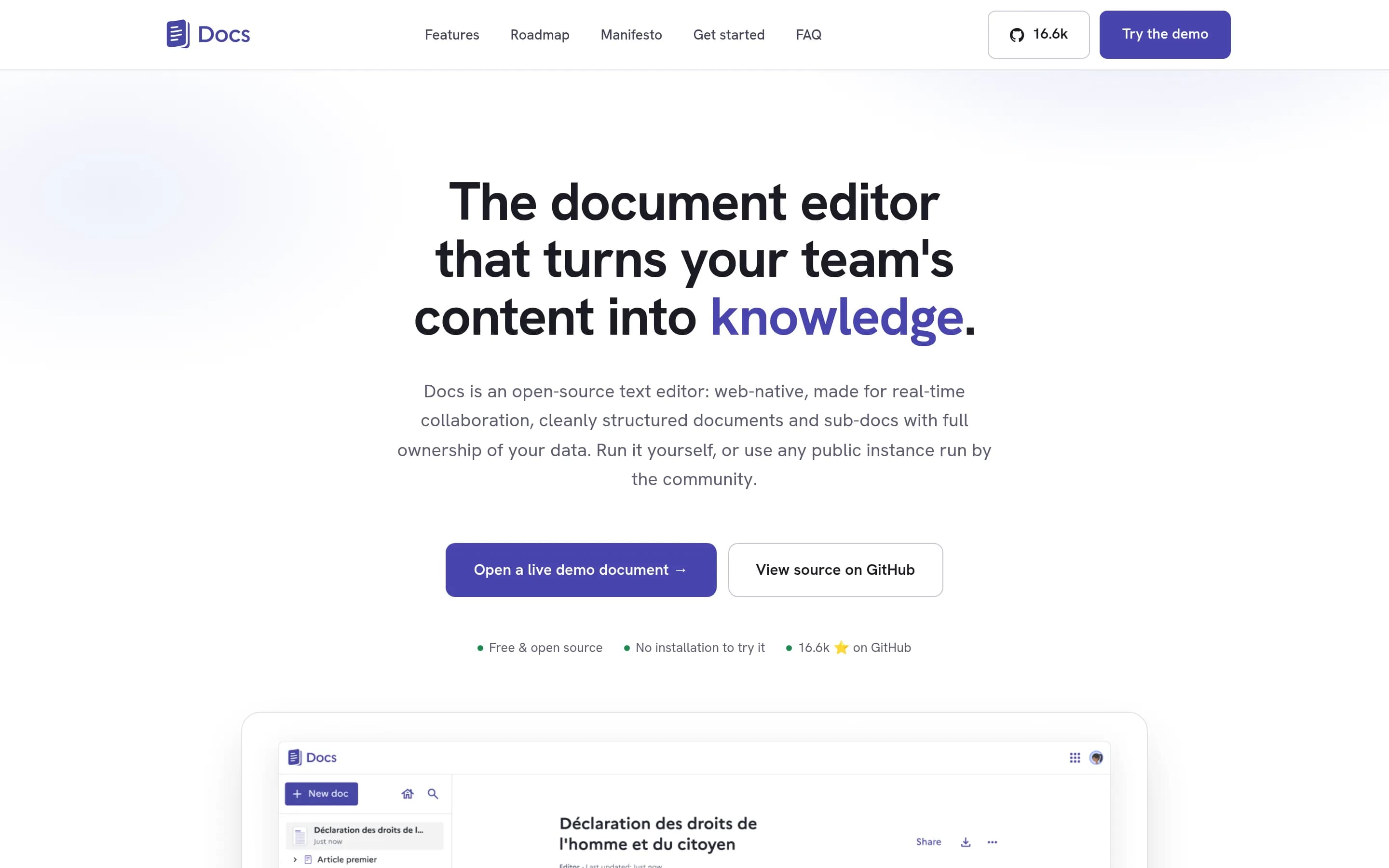
Docs is a credible open-source replacement for Craft’s document-writing and knowledge-base workflows, especially where self-hosting and data control matter. Its documented scope is narrower: choose Docs for collaborative, structured documents and sub-documents; choose Craft if calendars, tasks, daily notes, whiteboards, templates, or dedicated cross-device apps are central to the workspace.
What it does
La Suite Docs is an open-source, web-native collaborative editor for teams and organizations. It supports rich-text and Markdown editing, structured documents and subpages, hierarchical knowledge organization, searchable content, comments, sharing, live cursors, presence, and granular access control. Offline editing and document import/export are also documented.
Optional model- and gateway-agnostic AI features can rewrite, summarize, translate, and correct selected text, with a beta AI toolbar and cursor workflow. Docs includes presentation mode, PDF exports, resource-server and server-to-server APIs, and an example for importing Meet transcripts. The complete product can be self-hosted using Kubernetes or Docker Compose, with local development documented through Docker and Docker Compose.
What it covers
- Notes refined into shareable documents
- Structured, block-based documents
- Nested document organization
- External sharing and access controls
- API-based integrations
What’s different
- No documented calendar planning
- No documented tasks or reminders
- No documented daily journal
- No documented whiteboards
- No documented template library
- No documented native device apps
- No documented Craft-specific importer
OOpen-knowledge3,466
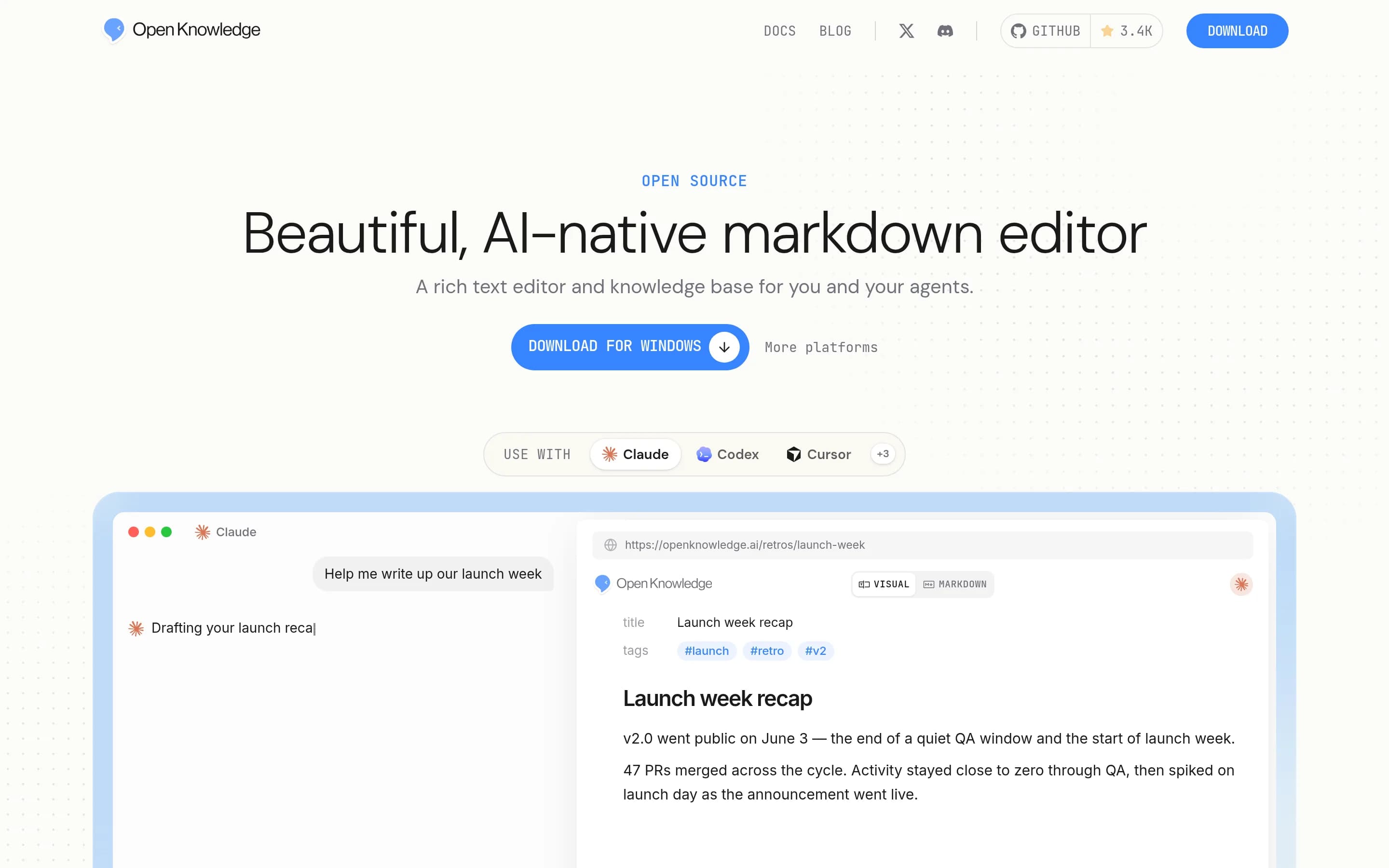
OpenKnowledge is the stronger choice for users who want open-source, local-first ownership of Markdown/MDX files, self-hosting, Git-based collaboration, and AI-agent workflows. Craft remains the better fit for people who need a broader, polished cross-device workspace combining documents with calendars, daily notes, tasks, reminders, and whiteboards. The main tradeoff is file and deployment control versus Craft’s шир
What it does
OpenKnowledge is a WYSIWYG markdown and MDX editor for existing folders, wikis, Obsidian vaults, codebases, knowledge bases, specifications, and notes. It provides file navigation, search, tabs, graph-based wiki-link viewing, embeddable HTML, and rich components for reports and technical documents.
The application integrates side-by-side AI editing with Claude, Codex, OpenCode, Pi, and other harnesses, and includes MCP, skills, and agentic search for LLM wikis and knowledge graphs. Optional team sharing and synchronization use Git and GitHub. It is available as desktop software for macOS, Windows, and Linux, or as a locally run web application installed and started through its CLI.
What it covers
- Rich document editing
- Notes and knowledge bases
- Shareable team content
- Reusable templates
- MCP-based integrations
- Windows and macOS apps
What’s different
- No documented calendar planning
- No documented tasks or reminders
- No documented daily journal workflow
- No documented general whiteboards
- No documented native mobile apps
- No documented Vision Pro app
CColanode5,015
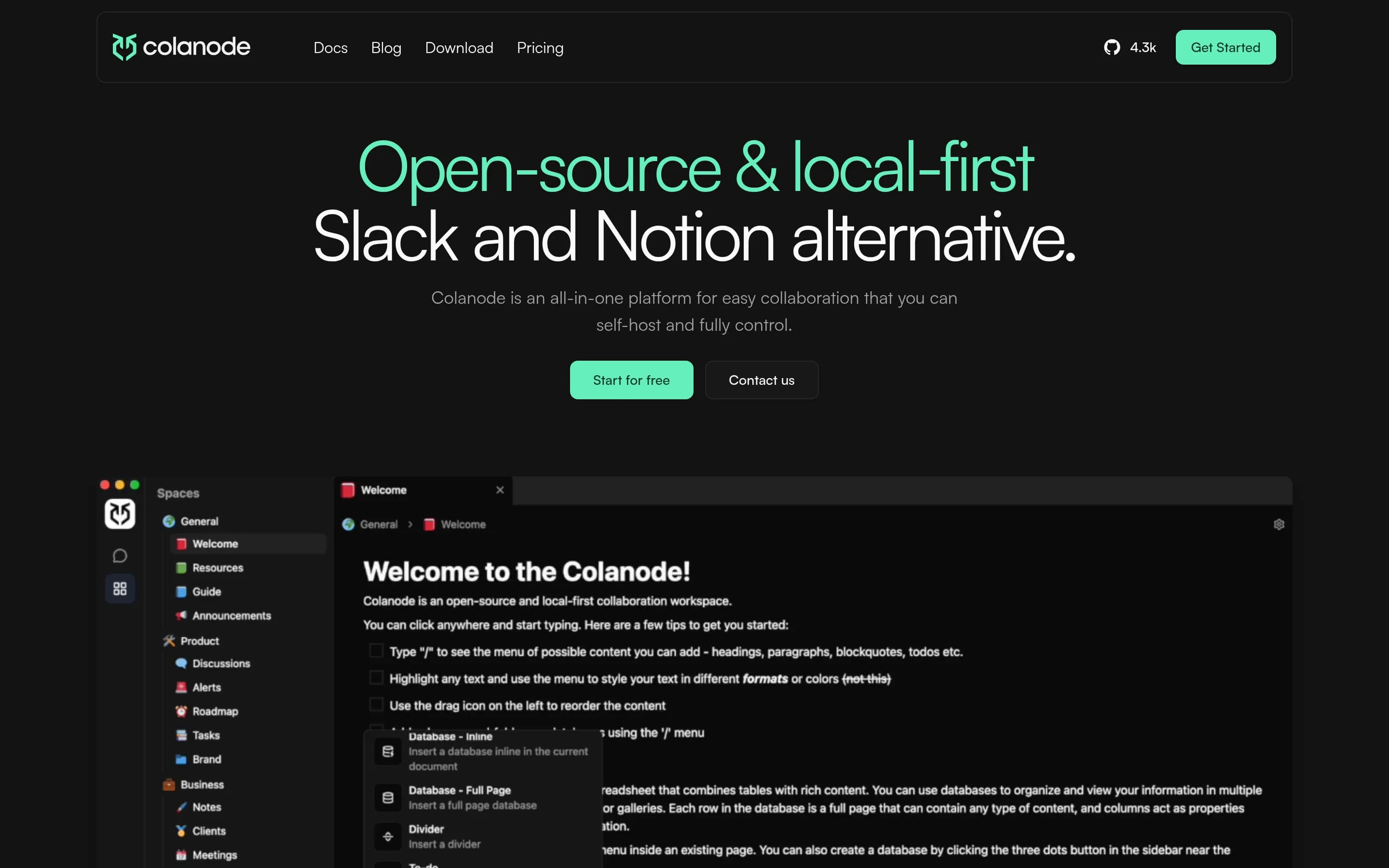
Colanode is the stronger choice for teams prioritizing open-source, self-hosted, local-first collaboration, structured databases, chat, and offline work. Craft remains the better fit when its document-refinement workflow and adjacent features—daily notes, reminders, whiteboards, templates, and API/MCP connections—are essential, because the supplied Colanode sources do not document those capabilities. Colanode is not,
What it does
Colanode is an open-source, local-first collaboration workspace for individuals and teams. Users can communicate through real-time chat, create rich-text documents, wikis, and notes, organize information in customizable databases with table, kanban, and calendar views, and store and share files within workspaces.
The client saves changes to a local SQLite database before synchronizing them with a server, supporting offline work and immediate local reads. CRDTs powered by Yjs enable concurrent editing of pages and database records. Colanode provides web and desktop clients, hosted cloud servers, and a self-hosted server deployment model using Docker Compose or Kubernetes, with Postgres, Redis, and configurable file storage backends.
What it covers
- Rich-text documents and notes
- Calendar-oriented views
- Web, desktop, iOS, and Android access
- Shared workspace content
What’s different
- No documented daily-notes or journal workflow
- No documented task reminders
- No documented whiteboards
- No documented templates
- No documented API or MCP connections
- No documented Craft import or compatibility path
SSurf3,524
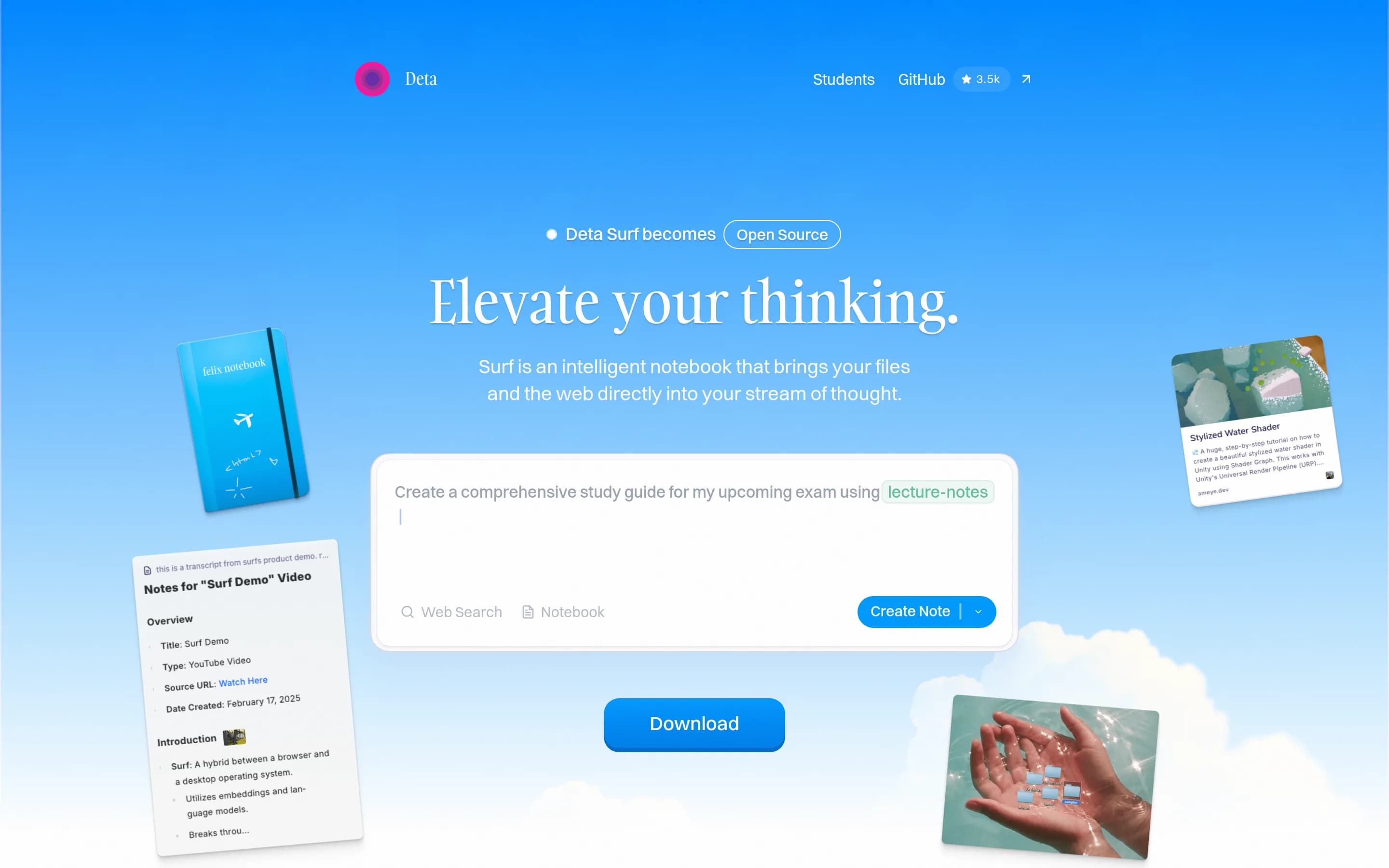
Surf is the stronger choice for individuals doing source-heavy research who want local, open-format data and a choice of cloud or local AI models. Craft remains the better fit for polished, shareable documents and integrated planning: Surf’s supplied materials do not document equivalent calendars, reminders, whiteboards, templates, mobile apps, or project-delivery controls. Surf is also still in beta, so teams that需要
What it does
Deta Surf is an open-source AI notebook for collecting files, websites, YouTube videos, PDFs, links, and other media in a local library organized into notebooks. Users can open resources in tabs or split view, work offline with much of the library, and store data in open, transparent formats.
Its Smart Notes workflow supports @-mentions, AI-generated notes, web searches, rich formatting, code blocks, to-do lists, and citations linked to source locations. Surflets can generate interactive applets without writing code. The desktop application runs on macOS, Windows, and Linux, and supports user-provided cloud or local language models, including models accessed through local tooling.
What it covers
- Notebook-based note organization
- Rich notes with to-do lists
- Cross-platform desktop access
- Local file and web-content capture
What’s different
- No documented calendar planning
- No documented reminders system
- No documented whiteboards
- No documented template library
- No documented mobile apps
- No documented API or MCP connections
- No documented polished-document sharing workflow
- No documented Craft-specific importer
NNeutrinote472
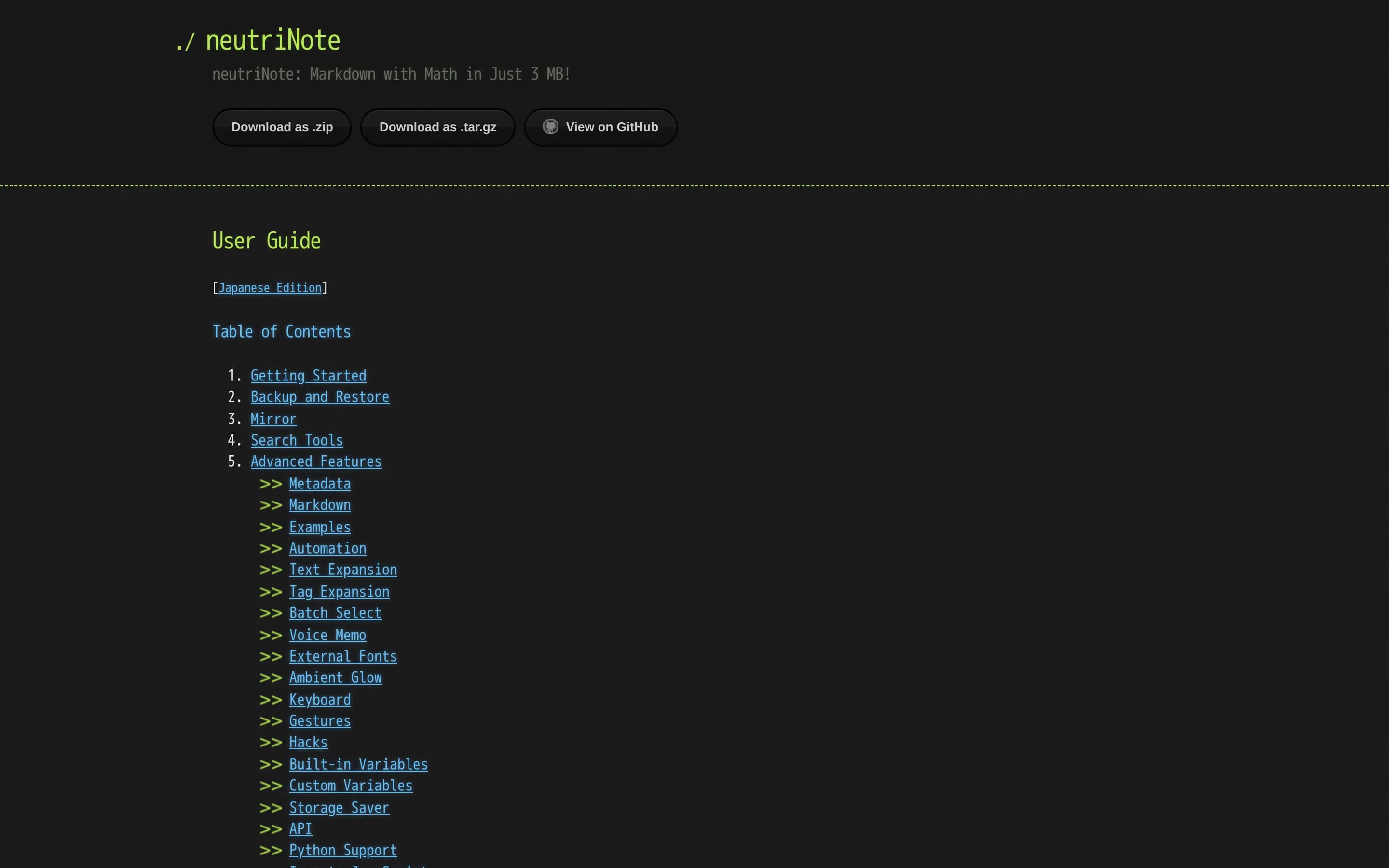
Neutrinote is a narrower, Android-focused alternative for people who value searchable plain-text/Markdown notes, local storage, math support, source access, and user-controlled synchronization. Craft remains the better choice for cross-device, polished-document workflows that also require calendars, tasks, reminders, whiteboards, templates, or MCP connections. Migrating trades Craft’s integrated planning and sharing—
What it does
neutriNote is a lightweight Android note-taking application built around UTF-8 plain-text storage and long-term searchability. It supports rich Markdown with LaTeX, text reflow, inter-note linking, offline search and replace, themes, text expansion, diagrams, ASCII art, and customizable writing workflows.
The app can edit notes stored in cloud locations, offers local storage with optional synchronization, and exports notes to PDF or HTML. It also includes Python support, basic Vue.js support, in-note JavaScript evaluation, and integrated utilities such as a dictionary, clipboard viewer, barcode scanner, and ASCII-art tools. The Community Edition is distributed under GPL-3.0 and can be built by importing the project into Android Studio.
What it covers
- Note capture and editing
- Formatted document authoring
- Searchable note storage
- API or automation hooks
- Exportable documents
What’s different
- No documented Apple, Windows, or Vision Pro apps
- No documented calendar planning
- No documented integrated task and reminder system
- No documented daily-note or journal workflow
- No documented visual whiteboards
- No documented template library
- No documented MCP connections
- No documented Craft-specific import
- No equivalent polished sharing workflow documented