
DDataFast
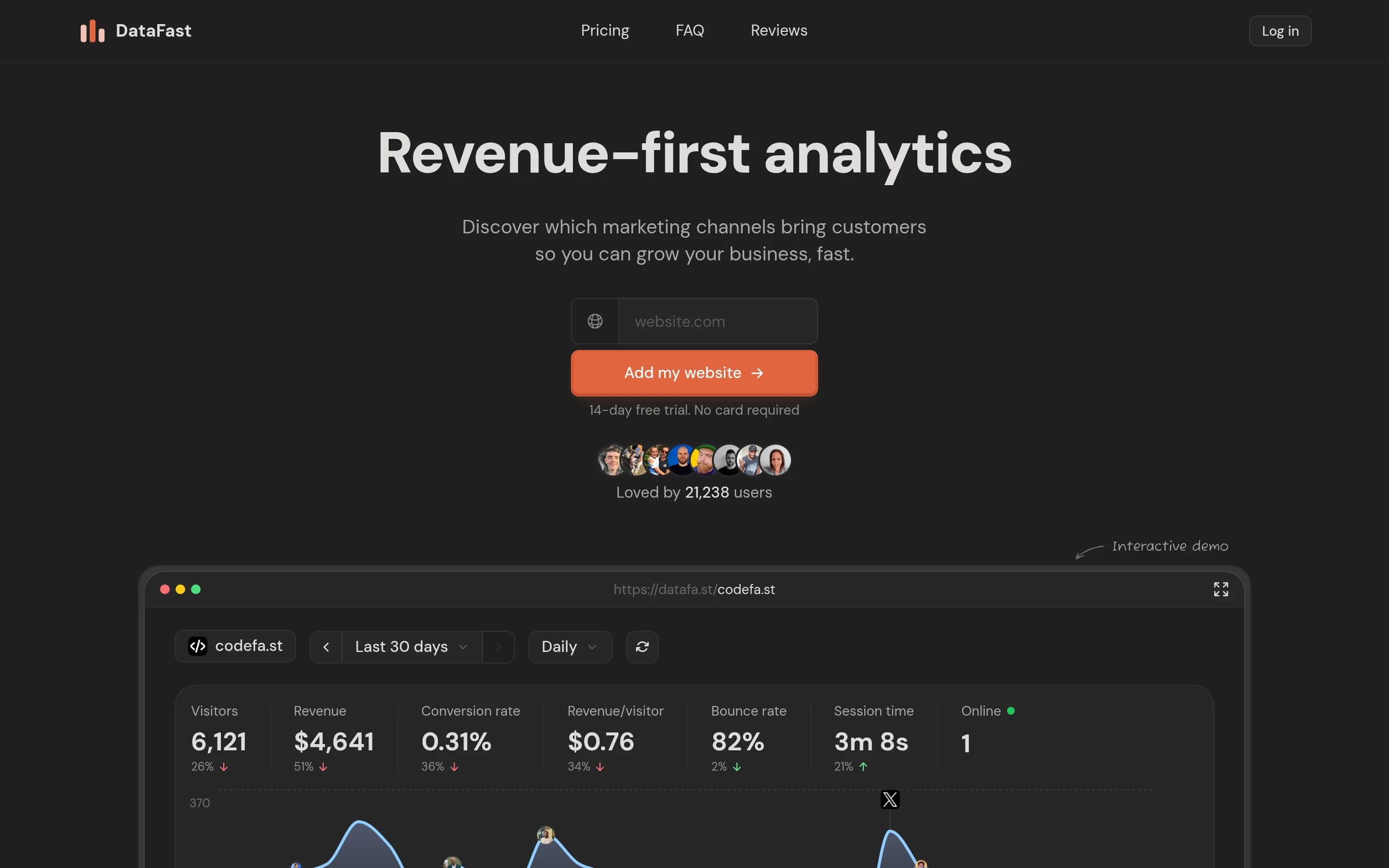
DataFast is a web analytics platform that connects traffic and visitor journeys with payment data to attribute revenue to marketing channels, pages, and campaigns. It also supports goals, conversion funnels, real-time visitor analysis, and web-to-app tracking.
Why people leave DataFast
Someone might seek a DataFast alternative if they need a different balance between revenue attribution and broader analytics. DataFast is centered on connecting website traffic with payments and identifying the channels, pages, and journeys associated with revenue. That focus may be less suitable for organizations whose main requirement is deep in-product behavioral analysis, highly customized business intelligence, or infrastructure observability rather than marketing and conversion reporting.
Privacy and tracking requirements may also influence the decision. DataFast offers both a default cookie-based script and a cookieless option, but its documentation notes a trade-off: cookieless visitor identifiers rotate roughly every 24 hours, making long-term journeys and revenue attribution less accurate. Teams that must avoid cookies while retaining longer-lived attribution, require a particular consent architecture, or need full control over data residency and retention may therefore compare other products or self-hosted systems.
Cost and usage limits could matter as traffic grows. DataFast’s plans are based partly on monthly event volume, and the site states that tracking continues after a plan limit is exceeded but dashboard access requires an upgrade. A high-traffic site, an application generating many custom events, or an agency managing numerous properties may prefer a different pricing model, more granular usage controls, or an open-source deployment whose operating costs can be managed directly. Limits on websites, team members, and retention also vary by tier.
Integration coverage is another possible reason to evaluate alternatives. DataFast provides native connections for several payment providers, Shopify, Google Search Console, Meta Ads, and numerous site-building frameworks, along with an API, CLI, and MCP server. Even so, a team may depend on an unsupported advertising network, payment system, warehouse, experimentation platform, or reporting workflow. Historical migration is also a consideration: the supplied page specifically identifies Plausible import support while describing Google Analytics import as upcoming.
Finally, some organizations may want greater ownership or extensibility than a hosted analytics product provides. Although DataFast exposes analytics and account functions through APIs and agent-oriented tools, certain operations remain dashboard-only, and the crawled pages do not describe a self-hosted edition. Teams prioritizing source-code access, custom storage, offline operation, or independently auditable tracking logic may consequently look for an open-source alternative.
5 Best Open Source DataFast Alternatives (Ranked)
Each alternative is evaluated for core feature coverage, deployment options, licensing, project health, and overall fit. The ranking prioritizes how closely a tool matches DataFast's primary workflows, using popularity only as a secondary signal.
UUmami38,202
Umami is the stronger choice for teams prioritizing open-source, cookieless analytics with either self-hosting or cloud deployment. DataFast remains the better fit when the primary requirement is its documented depth in payment connections, visitor-level revenue attribution, cross-domain or web-to-app journeys, and marketing integrations; the supplied Umami material claims traffic, campaign, behavior, conversion, and
What it does
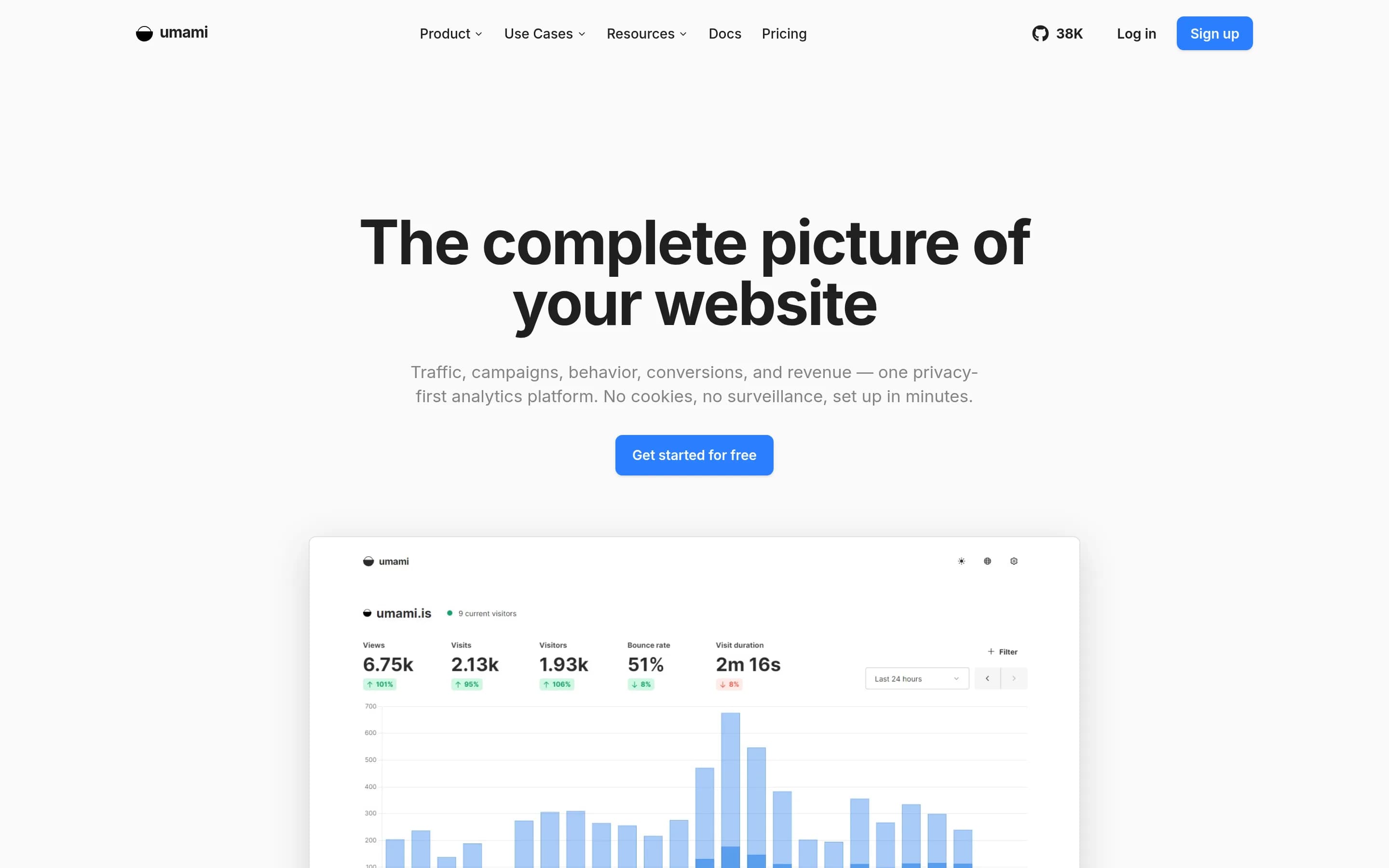
Umami is an open-source, privacy-first web analytics platform that brings traffic, campaign, behavior, conversion, and revenue metrics together. The repository describes cookie-free operation and includes topics covering audience segmentation, cohort analysis, statistics, user journeys, and web analytics.
Users can deploy the complete application from source with Node.js and PostgreSQL, then access it at a local web address. Docker images and Docker Compose are also documented, while the project offers a cloud option. The supplied facts do not document particular payment providers, advertising integrations, public reports, or real-time visitor features.
What it covers
- Traffic and campaign analytics
- Behavior and conversion analytics
- Revenue analytics
- Cookieless analytics
- Cloud-hosted availability
What’s different
- Native payment-provider connections not documented
- Visitor-level journey analysis not documented
- Cross-domain and web-to-app journeys not documented
- Real-time maps and device intelligence not documented
- Google Search Console and Meta Ads integrations not documented
- CLI and MCP access not documented
- Mobile apps and scheduled reports not documented

AAnalytics28,568
Plausible Analytics is the stronger choice when open-source deployment, cookie-free aggregate measurement, and control over hosting or raw data matter most. DataFast remains the better fit for teams centered on identifiable visitor journeys and revenue attribution across its documented payment, advertising, and web-to-app connections. The main tradeoff is privacy-oriented aggregate analytics versus DataFast’s more专门的
What it does
Plausible Analytics is an open-source, privacy-first web analytics tool for measuring website traffic with a lightweight, cookie-free script. Its dashboard presents aggregated website insights, while custom events and dimensions support goals, conversion tracking, funnels, and revenue attribution. It also provides real-time traffic monitoring, campaign tracking, Google Search Console keyword data, and support for modern single-page applications.
Users can export statistics through the Stats API or CSV, send events through an events API, share dashboards, invite team members with role-based access, and receive scheduled email or Slack reports. Plausible is available as a managed cloud service or as the self-hosted Plausible Community Edition, with the repository licensed under AGPLv3.
What it covers
- Traffic-source and page analytics
- Goals and conversion tracking
- Revenue attribution, with edition differences
- Conversion funnels, with edition differences
- Real-time traffic reporting
- Google Search Console integration
- Event and statistics APIs
- Public dashboard sharing
- Email reporting
What’s different
- Persistent individual tracking
- Cross-device visitor tracking
- Marketing funnels in Community Edition
- Ecommerce revenue goals in Community Edition
- Documented Meta Ads integration
- Documented native payment-provider connections
- Documented web-to-app journey tracking
- Documented CLI or MCP access
OOpen-Web-Analytics2,683
Choose Open Web Analytics when self-hosting, data control, customizable reports, session recordings, heatmaps, or extensibility matter more than turnkey marketing-revenue attribution. Choose DataFast when the primary workflow is connecting channels, campaigns, landing pages, and visitor journeys to payment revenue through documented provider integrations. OWA tracks e-commerce transactions, but the supplied materials
What it does
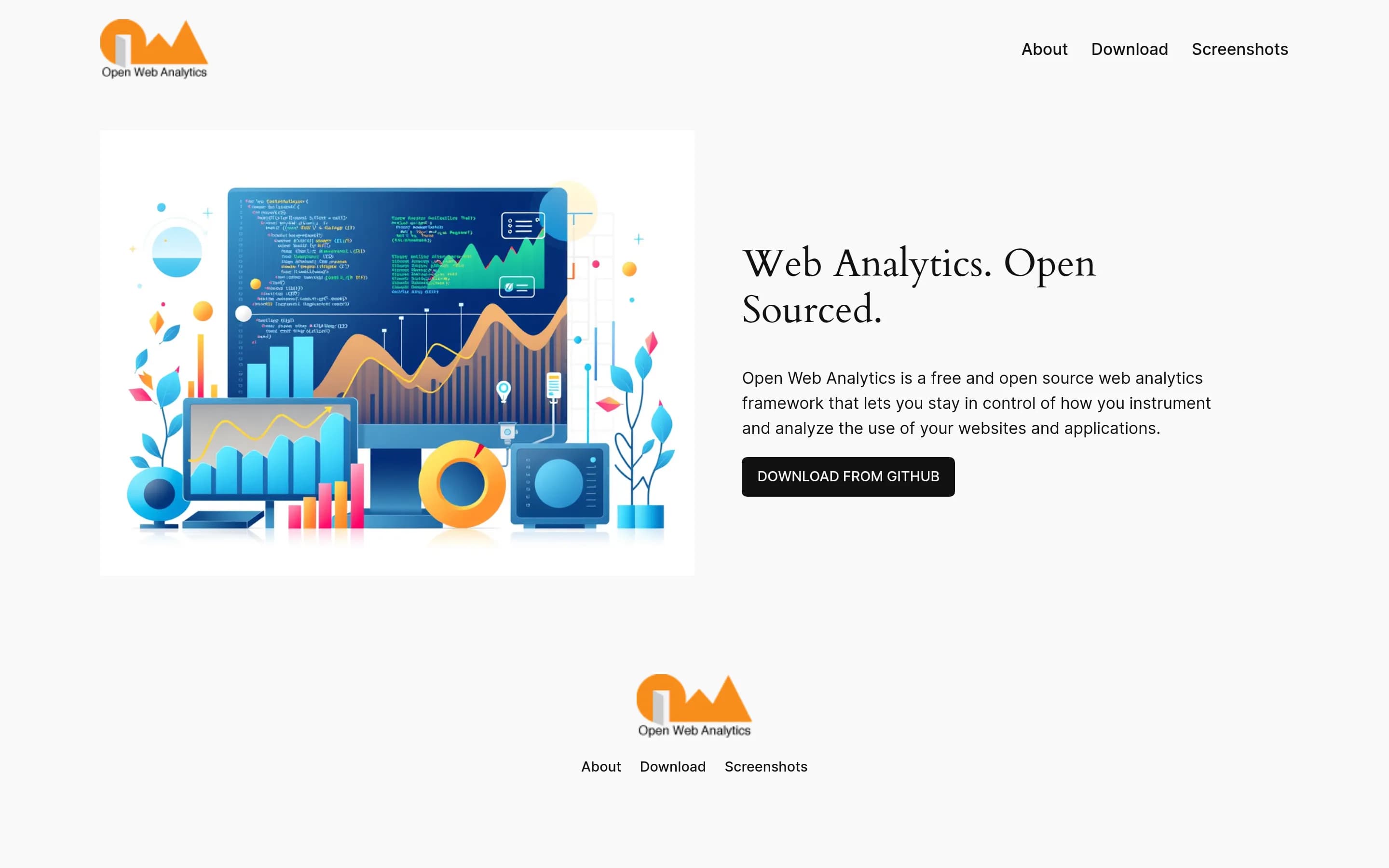
Open Web Analytics is an open-source server and JavaScript tracking client for measuring websites and applications. It tracks visitors, pageviews, e-commerce transactions, and configurable actions, and supports multiple websites from one server instance.
The product includes a reporting dashboard, customizable reports, visitor geolocation, heatmaps, and “Domstream” session recordings. It also provides a REST API for administration and data access, a multi-user reporting interface, and an extensible module framework.
The repository contains the OWA Server and tracker client. It is designed for user-controlled deployment and documents installation requirements and setup guidance. WordPress integration and a PHP SDK are referenced for adding tracking to supported sites and applications.
What it covers
- Website and application analytics
- JavaScript visitor tracking
- Visitor and pageview tracking
- E-commerce transaction tracking
- Configurable action tracking
- Reporting dashboards
- Visitor geolocation
- Programmatic data access
- Multi-user reporting
What’s different
- Documented payment-provider connections
- Marketing-channel revenue attribution
- Documented conversion funnels
- Documented cross-domain journeys
- Documented web-to-app tracking
- Documented cookieless tracking
- Documented SEO and ad integrations
- Documented public dashboards and scheduled reports
- Documented CLI and MCP access
TTalivia1,485
Talivia is the stronger choice for teams that want to operate an MIT-licensed, self-hosted revenue-attribution system and are prepared to maintain its PostgreSQL-based deployment. Its open-source edition covers core web analytics, session replay, sharing, import/export, and several payment integrations, but it is explicitly a subset of the hosted Talivia product and does not include some cloud integrations. Choose it
What it does
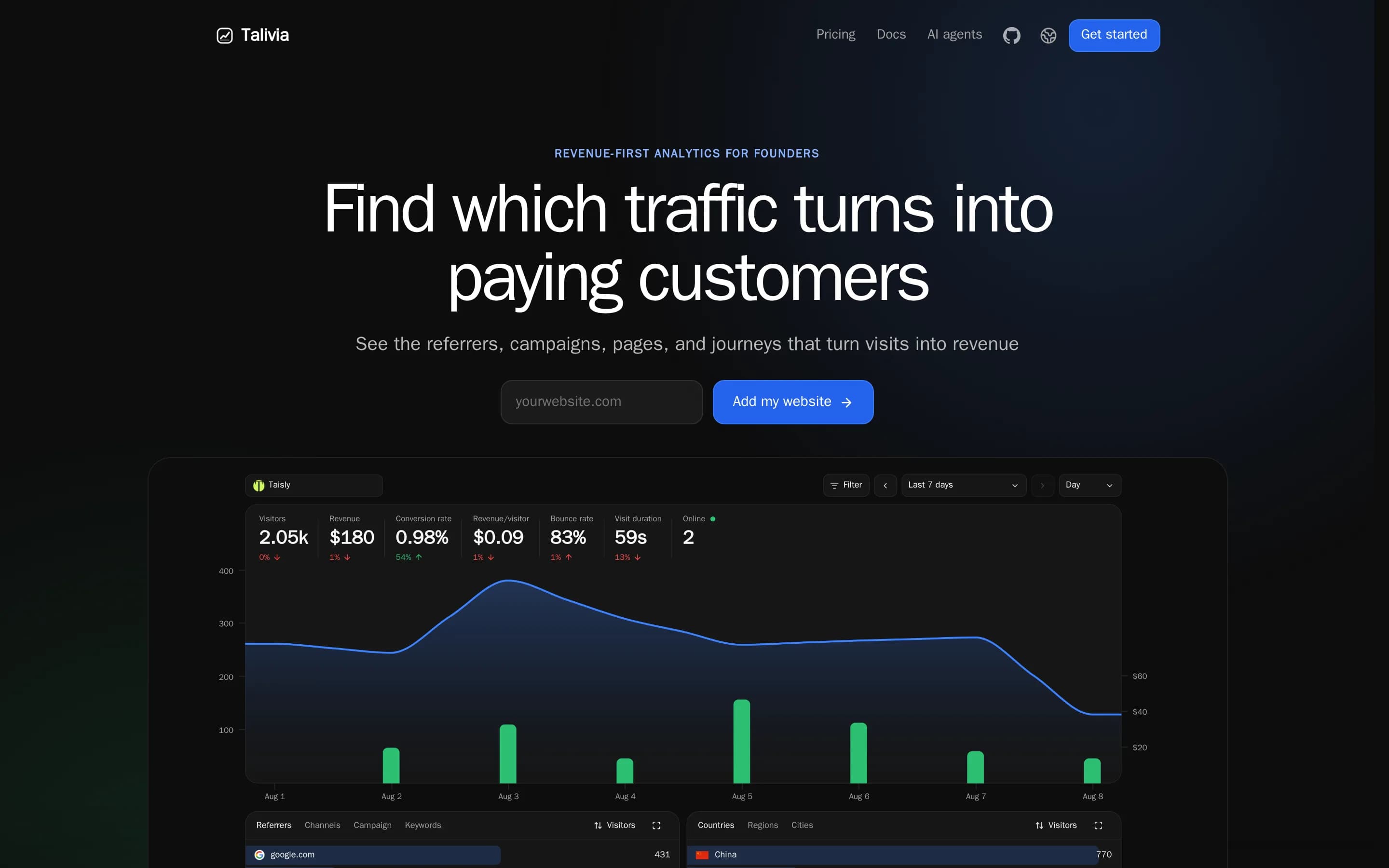
Talivia is an open-source, revenue-first analytics platform for founders. It combines core web analytics with Session Replay, website collaborators, shared analytics, import/export, and customer revenue data from Stripe, LemonSqueezy, Polar, Dodo, Yolfi, and a Manual Payment API.
Users create a website, install a tracking snippet, view visits on the dashboard, optionally enable Session Replay, and connect payment data. The documented workflows retain subscription lifecycle events, refunds, disputes, and first- and last-touch attribution.
The product is self-hostable with Node.js and PostgreSQL or through Docker Compose. The repository describes an open-source edition, while additional integrations and managed hosting are provided by Talivia Cloud.
What it covers
- Web traffic analytics
- Session and journey analysis
- Custom event tracking
- Traffic-to-revenue attribution
- Stripe, LemonSqueezy, and Polar connections
- Manual payment API
- Campaign and referrer reporting
- MCP-assisted analytics setup
What’s different
- Documented goals and multi-step funnels
- Documented Meta Ads integration
- Documented Shopify revenue connection
- Documented cookie and cookieless modes
- Documented web-to-app journey tracking
- Documented live maps and globe views
- Documented embeddable widgets and scheduled reports
- Cloud-only search and external integrations
Posthog-foss696
PostHog FOSS is the stronger choice for teams seeking self-hosted, event-based product and web analytics with SQL analysis and control of the deployment. DataFast remains the better fit when the primary requirement is purpose-built marketing revenue attribution across traffic sources, payments, campaigns, and visitor journeys. The supplied evidence does not establish that PostHog FOSS matches DataFast’s payment-athe-
What it does
PostHog is an open-source platform for product and web analytics. Its documented workflows include event-based product analytics, a GA-like web analytics dashboard for traffic, sessions, conversion, web vitals, and revenue, plus session replay, experiments, feature flags, error tracking, surveys, and data analysis with visualization or SQL.
Users can install the JavaScript snippet, SDKs, or API, and connect external sources such as Stripe, HubSpot, or a data warehouse. The repository documents PostHog Cloud as the recommended option and provides an open-source hobby deployment for self-hosting on Linux with Docker. The FOSS repository removes proprietary code and features.
What it covers
- Web traffic analytics
- Revenue monitoring
- Event-based analytics
- API-based instrumentation
- MCP access
What’s different
- No documented DataFast import path
- No documented payment-provider attribution workflow
- No documented persistent versus cookieless tracking modes
- No documented Search Console or Meta Ads attribution
- No documented public dashboards or scheduled reports