
PPipedrive
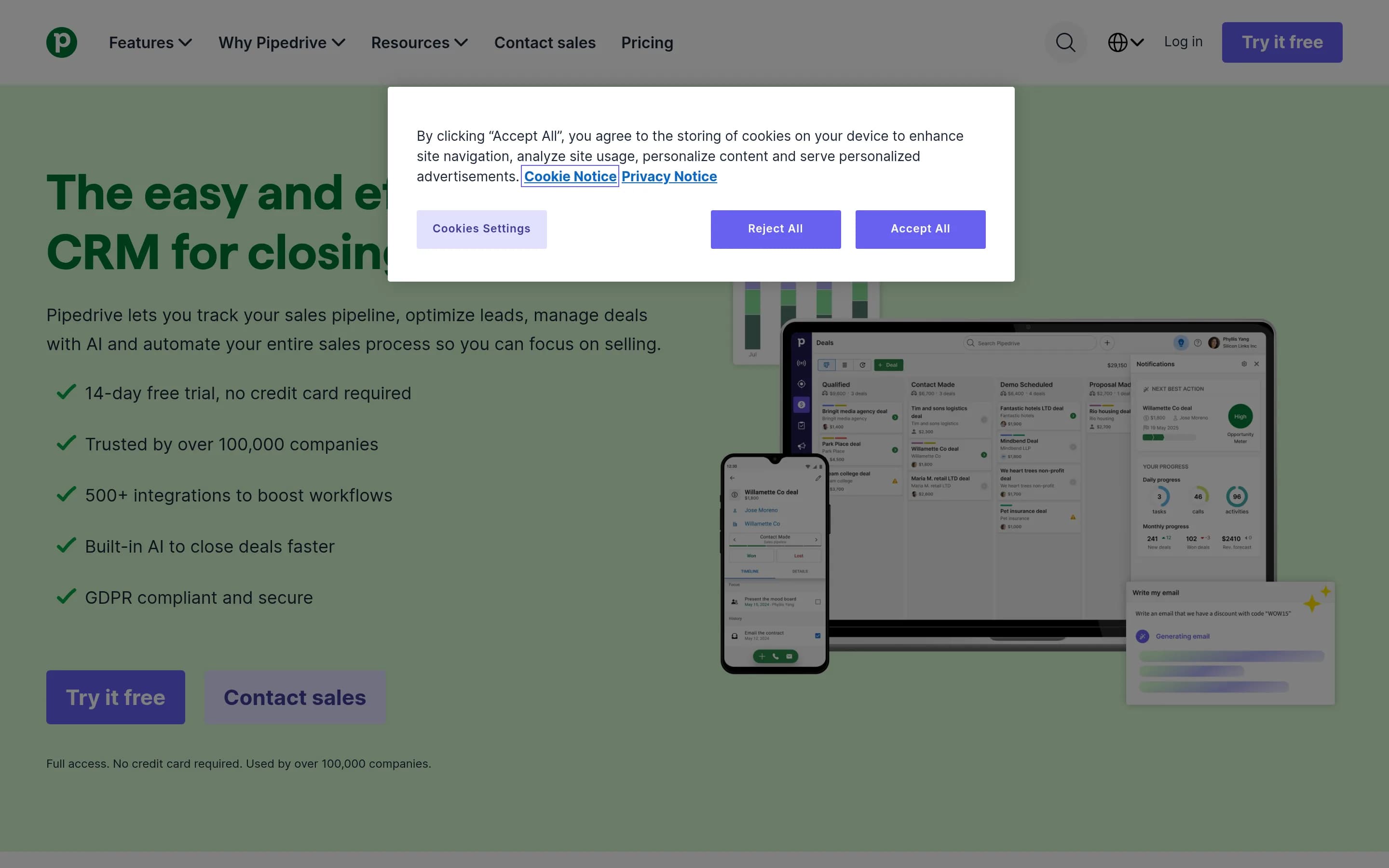
Pipedrive is a sales CRM for organizing contacts, leads, deals and sales activities. Its visual, customizable pipelines help teams move active opportunities through sales stages while coordinating follow-ups, communications, reporting and revenue forecasts.
Why people leave Pipedrive
Organizations may look for a Pipedrive alternative when its sales-focused pipeline model no longer matches their broader customer-management requirements. Pipedrive is designed primarily around leads, deals and sales activities, while some businesses want one system that also handles functions such as customer service, deeper marketing operations or other post-sale processes as first-class workflows. Although Pipedrive connects with hundreds of applications, a team may prefer a more consolidated suite to reduce the number of integrations and separate tools it must maintain.
Another reason to evaluate alternatives is workflow fit. Pipedrive’s defining interface is a customizable, kanban-style deal pipeline, which works naturally for stage-based sales processes. Organizations with more complex account hierarchies, unconventional opportunity lifecycles or highly specialized data requirements may want a CRM built around a different operating model. Teams may also compare how competing products handle permissions, custom fields, calculations, lead routing and multi-step automation before deciding which system best reflects their internal process.
Reporting and forecasting needs can also prompt a review. Pipedrive provides real-time reports, dashboards, goals, team monitoring, sales metrics and revenue forecasts, along with AI-assisted deal suggestions. However, organizations that require broader business intelligence, more extensive cross-department analysis or a different approach to forecasting may prefer another platform or a dedicated analytics layer. The relevant question is not whether Pipedrive offers reporting, but whether its available sales-oriented outputs match the organization’s data model and decision-making needs.
Finally, teams may seek an alternative because they want greater control over deployment, data handling or software customization. The crawled material describes Pipedrive as a hosted service with mobile applications, account controls, encryption and integrations. A business specifically evaluating open-source options may instead prioritize source-code access, self-hosting, direct database control or the ability to modify core behavior without relying on marketplace extensions. Migration effort should still be considered: Pipedrive centralizes contact history, email, calendars, tasks, automations and pipeline data, so replacing it may require careful data export, workflow reconstruction and integration changes.
7 Best Open Source Pipedrive Alternatives (Ranked)
Each alternative is evaluated for core feature coverage, deployment options, licensing, project health, and overall fit. The ranking prioritizes how closely a tool matches Pipedrive's primary workflows, using popularity only as a secondary signal.
CCrm3,345
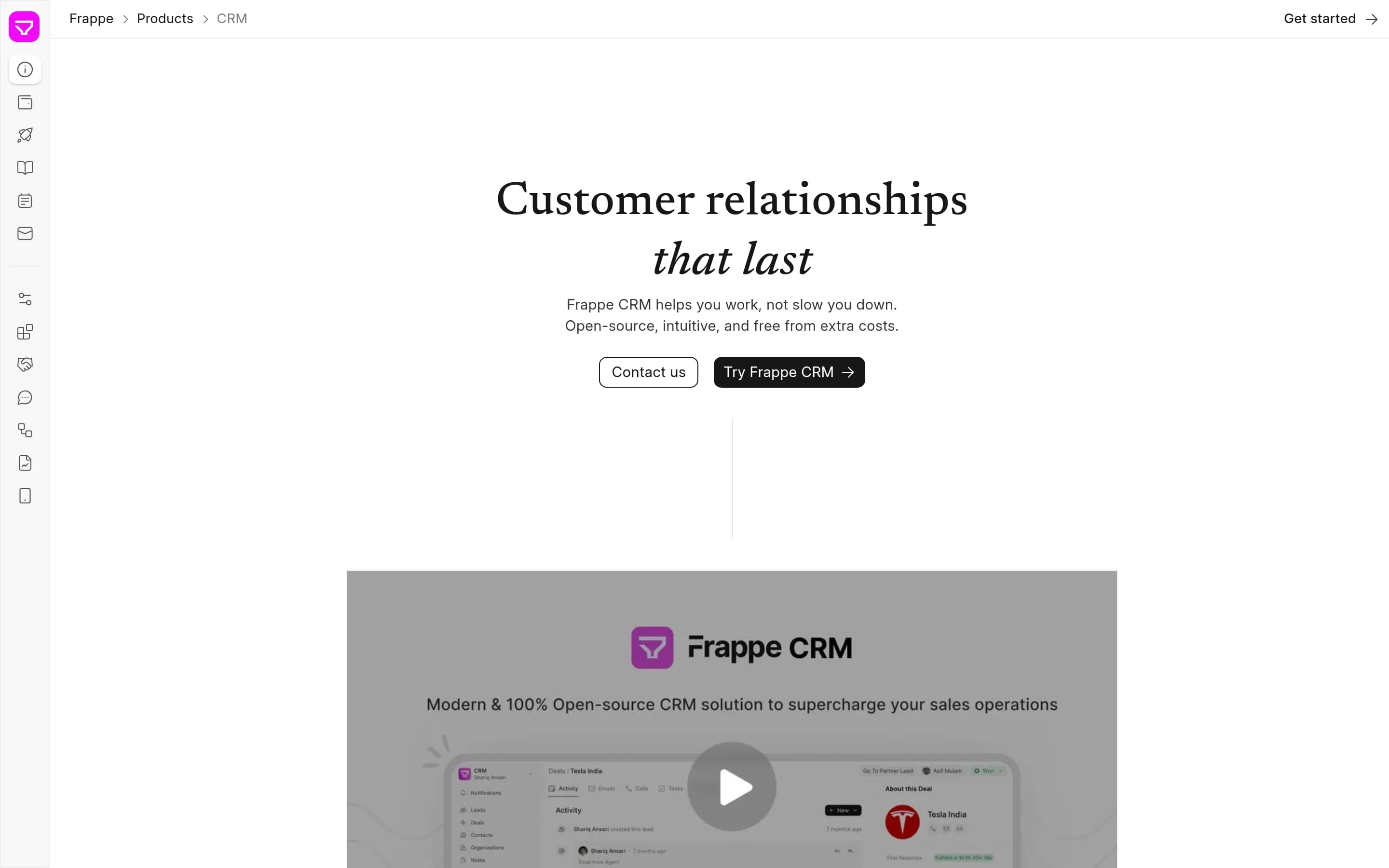
Frappe CRM is a credible open-source alternative for teams that need self-hosting, source access and customizable lead/deal workflows while retaining a visual Kanban pipeline. Pipedrive remains the safer choice when documented requirements include mature sales forecasting, goals, bottleneck analysis, dedicated mobile apps, broad marketplace coverage or specialized prospecting tools; equivalent Frappe CRM coverage is未
What it does
Frappe CRM is an open-source CRM for modern sales teams. Its documented workflow centers on lead and deal management, with an all-in-one record page for activities, comments, notes, and tasks. A drag-and-drop Kanban view tracks progress across stages, while custom filters, sorting, columns, and views help organize sales information.
The README documents built-in calling integrations for Twilio and Exotel, call recording, WhatsApp messaging through Frappe WhatsApp, email templates, and an ERPNext integration for invoicing and accounting. It provides a graphical web interface and can be used through Frappe Cloud or self-hosted in production. Local setup and Docker Compose deployment are also documented.
What it covers
- Visual Kanban lead and deal tracking
- Centralized leads, contacts, deals and organizations
- Custom fields and pipeline statuses
- Tasks, notes, comments and follow-ups
- Email communication and templates
- Lead assignment and workflow automation
- Custom views and filters
- Web-form and API lead capture
What’s different
- No documented Pipedrive-specific migration
- No documented revenue forecasting or goal tracking
- No documented bottleneck analytics
- No documented native mobile apps
- No documented broad app marketplace
- No documented prospecting database
- No documented chatbot or live chat
- No documented calendar synchronization
WWacrm1,962
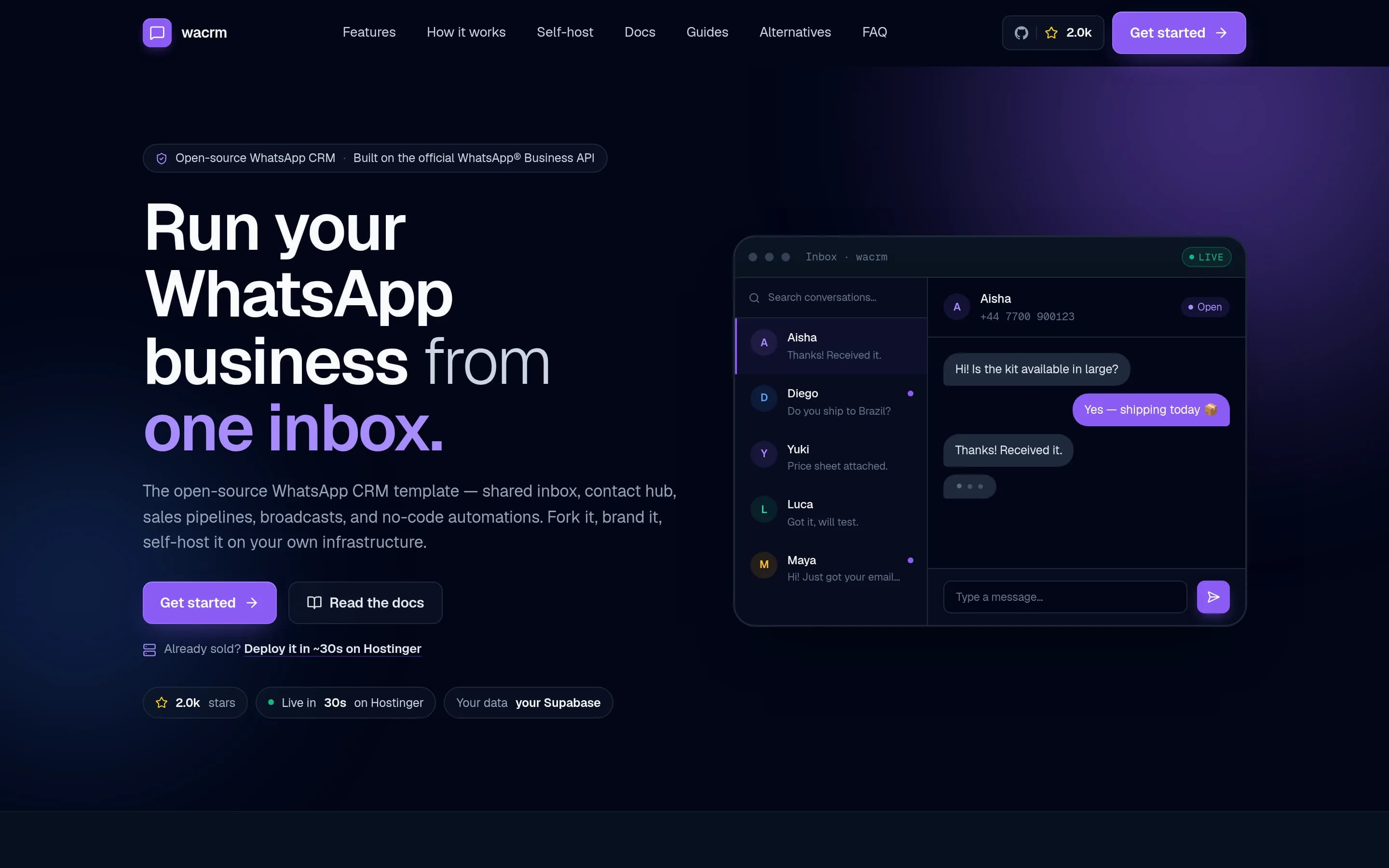
Wacrm is a narrower, self-hosted WhatsApp CRM template rather than a full like-for-like Pipedrive replacement. Choose Wacrm when WhatsApp is the primary customer channel and source-code control, self-hosting, and customization matter more than broad sales tooling. Choose Pipedrive when the priority is a hosted, sales-focused CRM with email/calendar synchronization, activity management, forecasting, mobile apps, and a
What it does
wacrm is a self-hostable CRM template centered on the official WhatsApp Business API. Teams can share one inbox, assign conversations, add notes, manage contacts with tags and custom fields, import CSV data, and connect conversations to Kanban sales deals. Broadcasts support approved Meta templates, delivery and read tracking, and recipient-specific variables.
The template also includes visual no-code automations with triggers, conditions, waits, tags, and webhooks; an AI reply assistant and optional auto-reply bot; team accounts with role-based access; a real-time dashboard covering response times, message volume, pipeline value, and activity; and a public REST API plus MCP server. It runs as a Next.js and Supabase application and can be started locally, deployed with Docker Compose, or hosted on Node.js services such as Hostinger, Vercel, Railway, or a VPS.
What it covers
- Kanban sales pipelines
- Contact records and custom fields
- Team roles and access controls
- Visual workflow automations
- Dashboards and pipeline metrics
- API and webhook integrations
What’s different
- No documented email synchronization
- No documented calendar synchronization
- No documented call or meeting scheduling
- No documented revenue forecasting
- No documented prospecting database
- No documented native mobile apps
- No documented app marketplace
AAtomic-crm1,200
Atomic CRM is a direct open-source CRM alternative: it documents contacts, deals in a visual Kanban pipeline, tasks, reminders, activity history, email capture, notes, custom fields, and API integration.
What it does
Atomic CRM is a full-featured customer relationship management application built with React, shadcn-admin-kit, and Supabase. It centralizes contacts, notes, captured email communications, custom fields, and aggregated activity history, while providing access control through Google, Azure, Keycloak, and Auth0.
The application supports deal management through a visual Kanban sales pipeline, plus tasks, reminders, data import and export, and API integrations. It is available under the MIT license and can be tested through an online demo. Users can run the complete application locally with Node, Make, and Docker; the documented startup process launches the Vite frontend, local Supabase services, and PostgreSQL database.
What it covers
- Visual Kanban sales pipeline and deal tracking
- Contact organization and CRM records
- Tasks, reminders, and follow-up tracking
- Email communication capture
- Activity history and notes
- Custom fields and data import/export
- API integration
What’s different
- Documented sales workflow automation for assignments, sequences, or automated handoffs
- Documented sales reports, dashboards, performance metrics, or revenue forecasts
- Documented calendar synchronization and meeting scheduling
- Documented outbound prospecting, chatbots, live chat, or web-form lead capture
- Documented marketplace integrations or native mobile applications
NNextcrm-app681
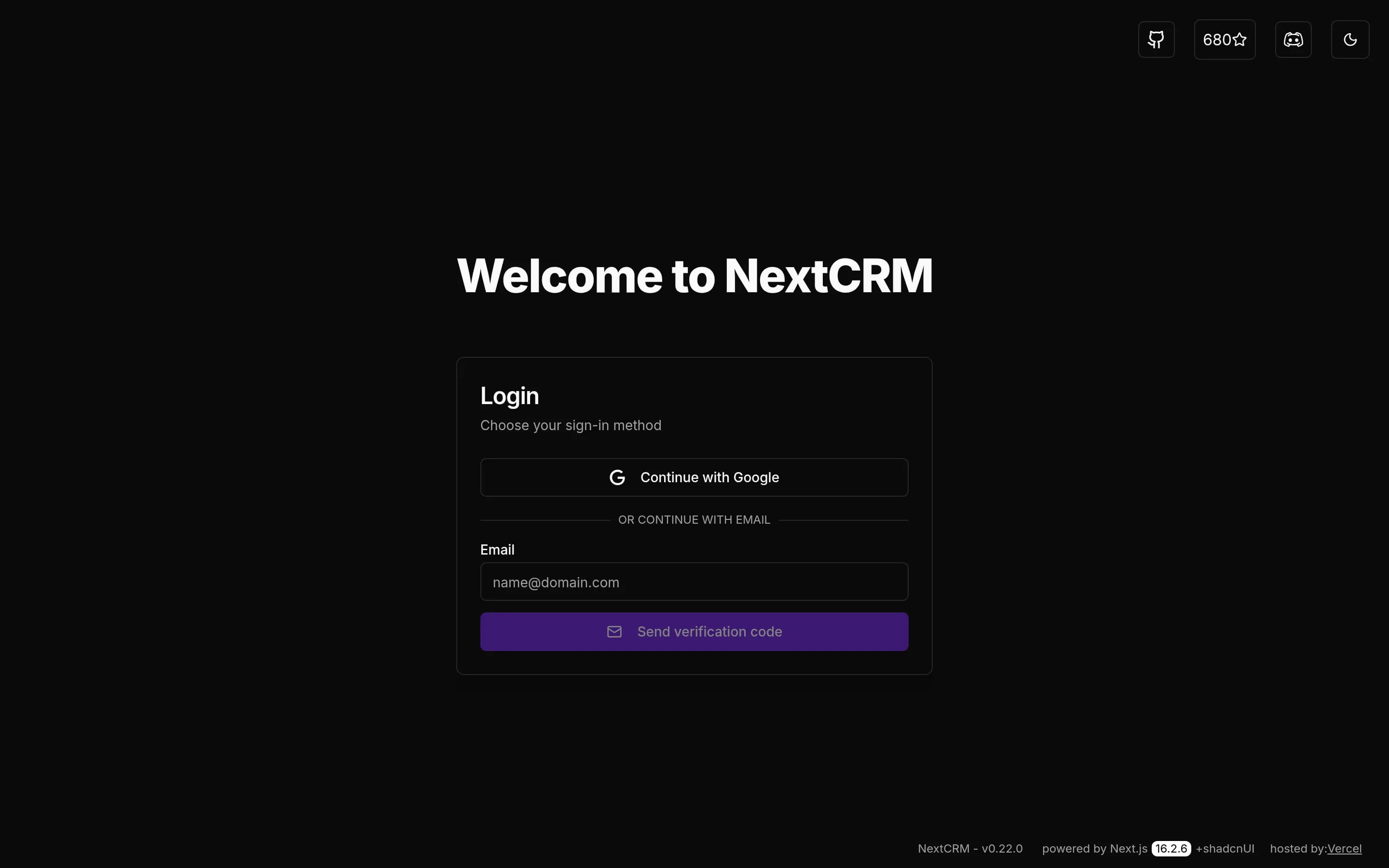
NextCRM is the stronger fit for teams wanting an MIT-licensed, self-hosted CRM that combines customer records with projects, invoicing, documents, email and AI-oriented functions. Pipedrive remains the safer choice for teams centered on a documented visual deal pipeline, sales automation, forecasting, mobile apps and a large integration marketplace; the supplied NextCRM evidence does not establish equivalent coverage
What it does
NextCRM is an open-source CRM built around accounts, contacts, leads, opportunities, contracts, targets, products, activities, and documents. Its documented workflows include CRUD management, linked notes, calls, emails, meetings and tasks, audit history, unified keyword and semantic search, reports, and AI-assisted contact and target enrichment.
The application also includes project management, invoicing with payments, taxes, currencies, PDF export and email delivery, an email client, document storage, vector search, and an MCP server for authenticated AI-agent access. It can run locally with Next.js and PostgreSQL, or through the supplied Docker Compose setup, which bundles the app, PostgreSQL with pgvector, MinIO, and Inngest.
What it covers
- Contact and lead records
- Opportunity records
- Calls, meetings and task tracking
- Email capabilities
- CRM reports
What’s different
- No documented Pipedrive data importer
- No documented visual deal kanban
- No documented calendar synchronization
- No documented revenue forecasting
- No documented mobile applications
- No documented integration marketplace
DDjango-crm612
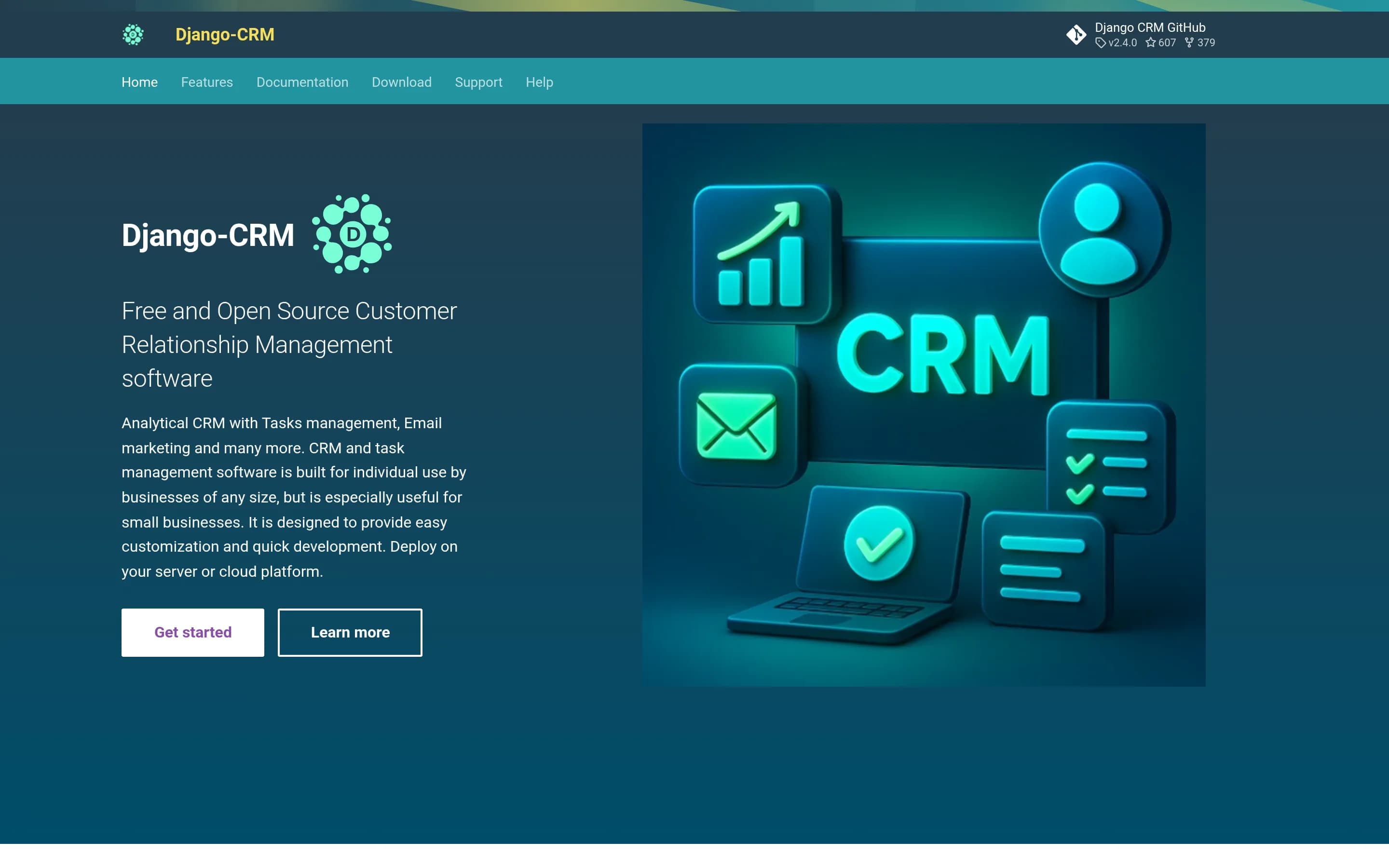
Django-CRM is the stronger fit when source access, self-hosting, Django customization, and consolidating sales with tasks, projects, email marketing, and analytics outweigh the convenience of a hosted sales CRM. Choose Pipedrive when the documented visual kanban pipeline, mobile apps, broad marketplace, lead-prospecting tools, and sales-automation coverage are central requirements; equivalent Django-CRM coverage is未不
What it does
Django-CRM is an open-source customer relationship management system for businesses and freelancers. It manages leads, opportunities, companies, contacts, deals, products, payments, tasks, projects, subtasks, reminders, and team assignments. Deal tracking and forecasting support sales workflows, while analytics provides sales funnel, income summary, lead-source, and request reports.
The platform includes SMTP/IMAP email integration, synchronization, linked correspondence, campaigns, newsletters, templates, contact segmentation, web forms, imports and exports, and selected messaging integrations. Its adaptive Django Admin interface provides filtering, sorting, search, permissions, and documentation. Django-CRM is designed for self-hosted or on-premise deployment as a standard Django project, with SQLite for evaluation and MySQL or PostgreSQL support.
What it covers
- Lead, deal, company, and contact records
- Sales pipeline and deal tracking
- Tasks, reminders, and team assignments
- Synchronized email correspondence
- Sales analytics and forecasting
- Role-based access controls
- Web-form lead capture
What’s different
- Documented kanban-style deal board
- Documented calendar synchronization
- Documented multi-step sales automation parity
- Documented outbound prospecting database
- Documented chatbot and live-chat capture
- Documented Android and iOS apps
- Documented broad integration marketplace
DDeskcommCRM566
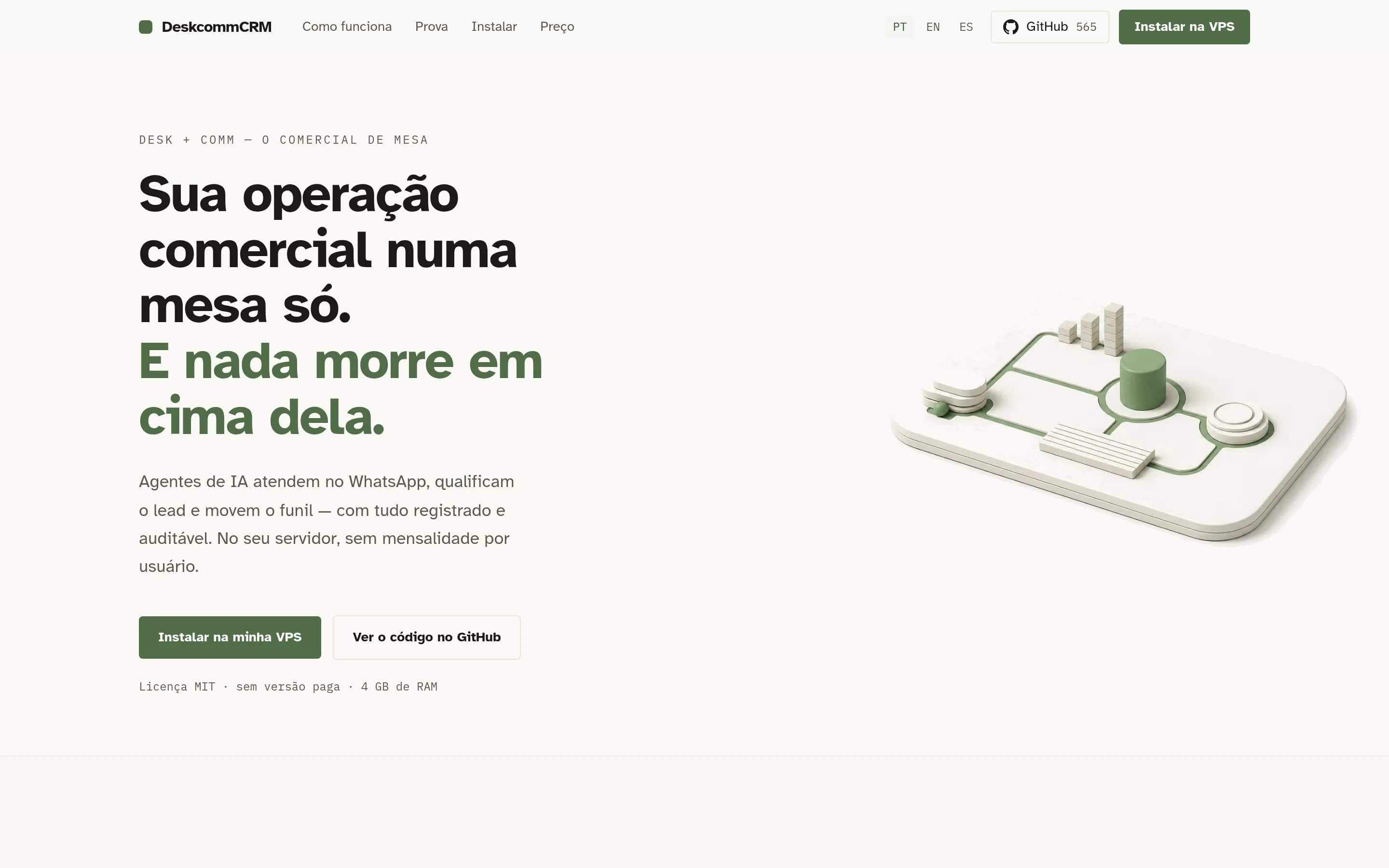
DeskcommCRM is the stronger fit for organizations that want an MIT-licensed, self-hosted CRM centered on WhatsApp conversations, configurable sales funnels, automation, and AI-assisted qualification. Pipedrive remains the safer choice for teams needing a more general sales CRM with documented email/calendar synchronization, forecasting, mobile apps, and a large integration marketplace. The main tradeoff is deployment
What it does
DeskcommCRM is an open-source sales operating system for businesses that sell through WhatsApp. Its CRM includes kanban sales funnels, contacts, lead qualification, follow-ups, performance views, assignment and routing, audit logs, and configurable business terminology across pipelines.
The product combines human and AI-assisted atendimento through WhatsApp, with tenant-specific RAG knowledge, automated follow-ups, webhooks, inbound lead sources, and QUANDO/SE/ENTÃO automation rules. It supports QR-based WAHA connections and Meta Cloud API, plus integrations such as Nuvemshop and MCP access for agents.
DeskcommCRM is designed for self-hosted deployment on a VPS with Docker. The repository documents one-command installation, HTTPS setup, database initialization, backups, health checks, rollback, and browser-based updates; Supabase provides the documented Postgres, authentication, and R2
What it covers
- Configurable stage-based sales funnels
- Contact and lead records
- Sales follow-up tracking
- Rule-based workflow automation
- Inbound lead capture
What’s different
- Documented email and calendar synchronization
- Documented revenue forecasting and goals
- Documented native mobile applications
- Documented broad application marketplace
- Documented Pipedrive data importer
ZaloCRM231
ZaloCRM is a self-hostable, open-source option centered on managing multiple Zalo accounts, real-time messaging, contacts, appointments, and a simple customer pipeline. Choose it when Zalo-based communication, deployment control, and source-code access are primary requirements. Keep Pipedrive when the priority is a mature, sales-centric deal workflow with documented email/calendar synchronization, lead capture, broad
What it does
ZaloCRM is an open-source web system for centrally managing multiple personal Zalo accounts. It provides real-time chat, customer and contact records, configurable pipeline stages, appointments with reminders, tags, notes, duplicate review, lead scoring, and activity search. Teams can also use dashboards, KPI views, funnel and performance analytics, reports, and Excel export.
The product includes integrations and operational features such as two-way Zalo–Telegram message mirroring, REST APIs, webhooks, AI assistance, workflow automation, and a mobile-capable PWA. It is designed for user-controlled deployment on Ubuntu with Docker and Docker Compose, using PostgreSQL, Redis, and MinIO or compatible S3 storage where required. The README documents browser access through a web interface and production deployment instructions.
What it covers
- Contact and customer records
- Stage-based customer pipeline
- Appointments and reminders
- Workflow automation
- Dashboards and reports
- Roles and team permissions
- Public integration APIs
What’s different
- No documented business email synchronization
- No documented calendar synchronization
- No documented Prospector equivalent
- No documented chatbot or web-form capture
- No documented recurring-revenue forecasting
- No documented native iOS or Android apps
- No documented Pipedrive data importer