
CClose
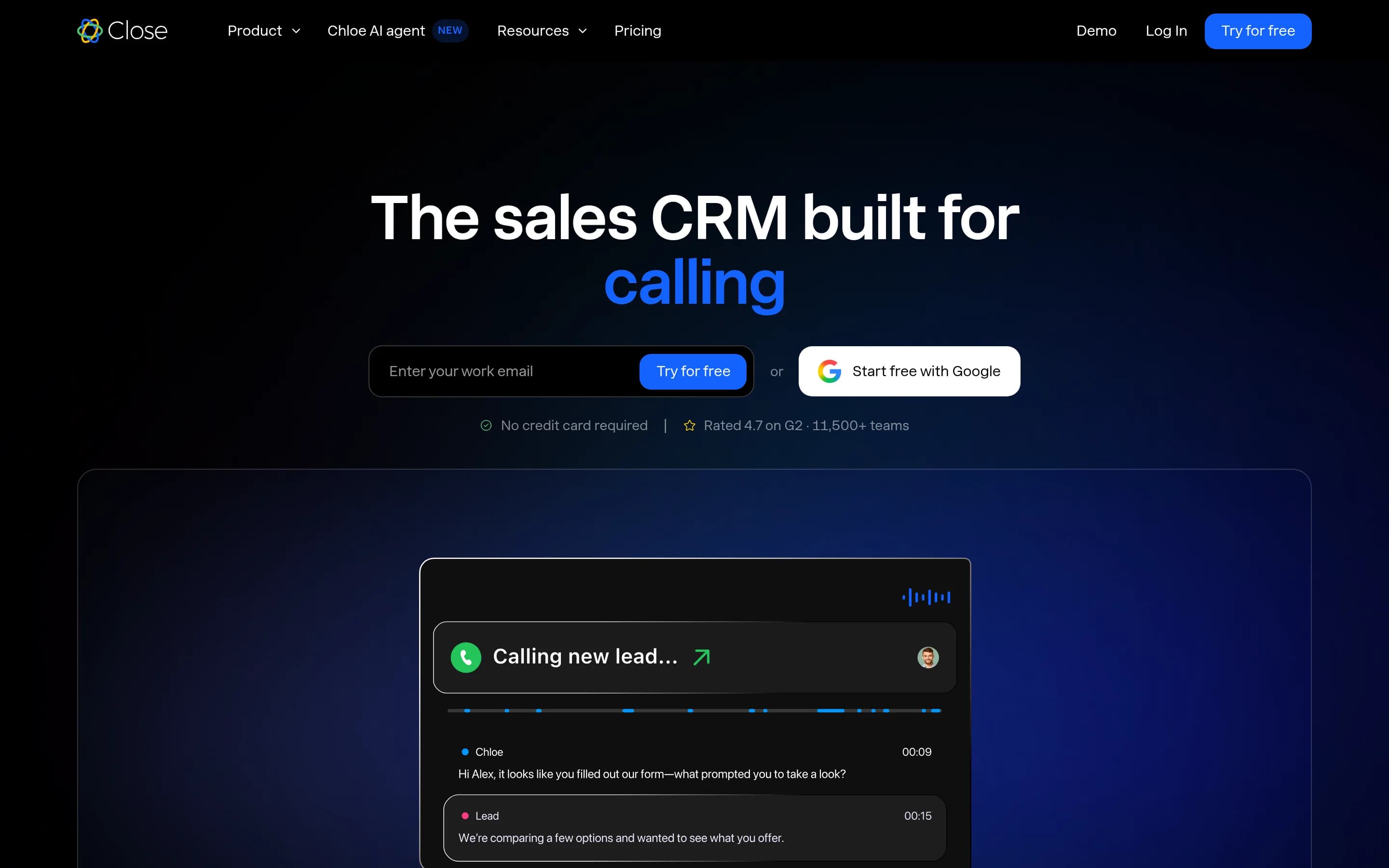
Close is a sales CRM that centralizes lead and deal records with calling, email, SMS, tasks, pipeline tracking, automation, and reporting. It is designed around managing sales conversations and follow-up from initial lead capture through closed deals.
Why people leave Close
A team might seek an alternative if Close’s sales-first design does not match its broader customer-management requirements. The product centers on leads, opportunities, outreach, and pipeline activity, while some organizations may need a system that also serves marketing, customer success, support, or other operational teams. Businesses with specialized account structures or processes may also prefer a platform whose data model and workflows are better aligned with their particular sales cycle, even though Close provides custom fields, activities, objects, and pipeline views.
Cost and packaging could be another consideration. The crawled pages indicate that core automation tools are available on Professional and higher plans, while some capabilities—such as the AI Call Assistant, Predictive Dialer, and premium phone numbers—may be add-ons or limited to higher tiers. Calling can also involve charges for outbound minutes and phone numbers. Teams should compare the total cost of the plan, telephony usage, and advanced dialing or AI features with alternatives, particularly if they have many users or operate a high-volume outbound motion.
Some buyers may prefer a more modular tool stack rather than an all-in-one sales workspace. Close combines CRM records with calling, email, SMS, forms, meeting capture, and automated follow-up. That consolidation can reduce switching between tools, but a company that already relies on dedicated communication, analytics, scheduling, or automation products may not need overlapping functionality. Its preferred applications might be available through integrations, yet the organization may still decide that another CRM fits its existing stack or integration requirements more closely.
The product’s emphasis on rapid calling and multichannel outreach may also be unnecessary for teams with a primarily relationship-led, partner-led, retail, or low-volume sales process. Power and predictive dialers, voicemail drops, bulk outreach, sequences, and an AI agent are most relevant when frequent prospect communication is central to the workflow. A team that mainly needs lightweight contact tracking—or, conversely, extensive enterprise administration and cross-department processes—could reasonably evaluate alternatives at either end of the market.
Finally, organizations may want different approaches to deployment, data control, customization, or AI-assisted sales work. Close is a hosted platform with an AI agent that can call leads, reply to emails, enrich contacts, summarize conversations, and update CRM data. Teams with restrictive governance policies, unusual integration needs, or a preference for self-hosted and open-source infrastructure may therefore look for a system offering greater control over hosting, data flows, and automation behavior.
6 Best Open Source Close Alternatives (Ranked)
Each alternative is evaluated for core feature coverage, deployment options, licensing, project health, and overall fit. The ranking prioritizes how closely a tool matches Close's primary workflows, using popularity only as a secondary signal.
SSuiteCRM5,669
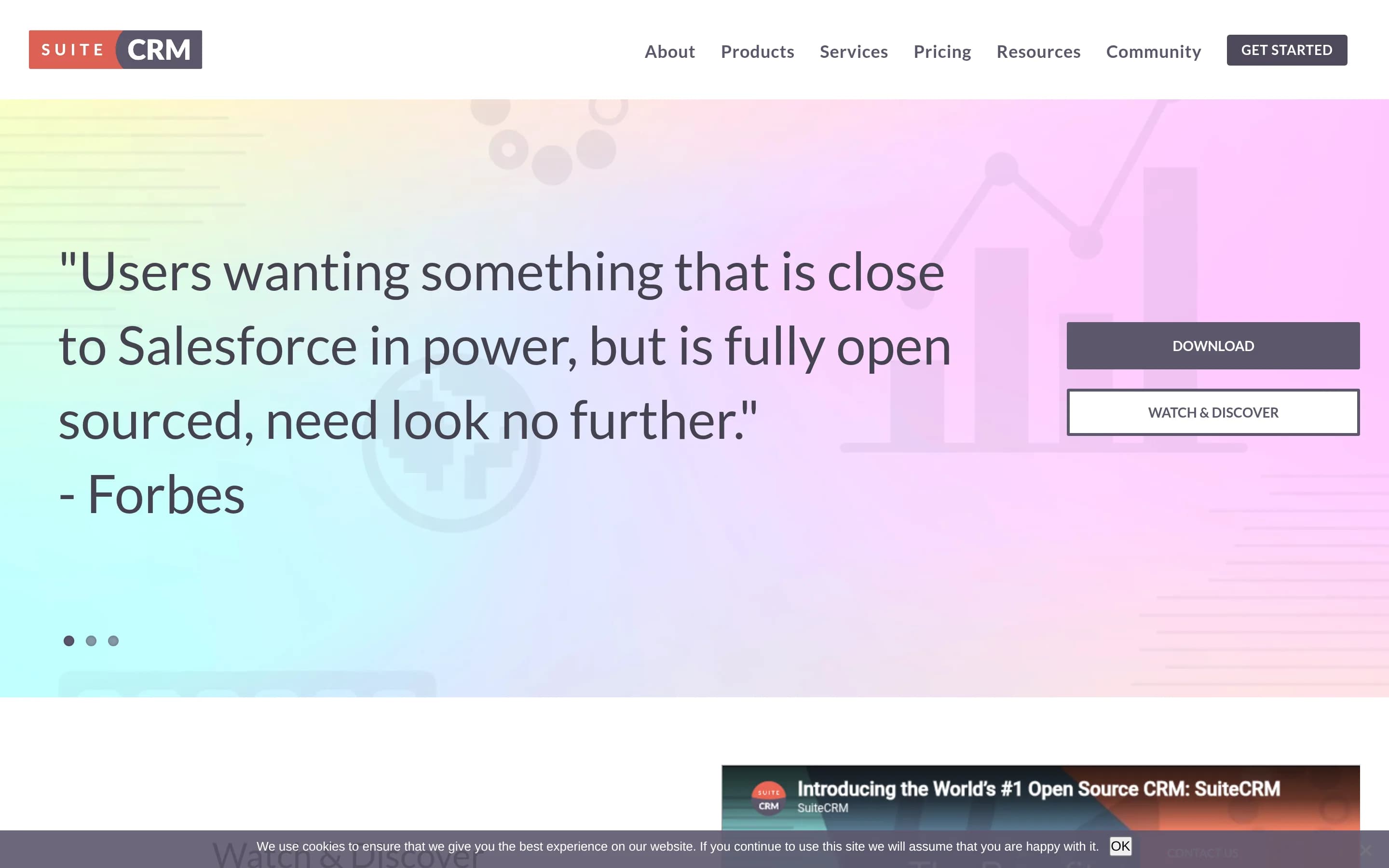
Choose SuiteCRM when self-hosting, data control, customization, and a CRM spanning sales, marketing, and service matter more than an integrated outbound-sales workspace. Choose Close when representatives depend on documented built-in calling, email, SMS, rapid follow-up, and AI-assisted conversation workflows; the supplied SuiteCRM material does not establish equivalent native coverage for several of those tools.
What it does
SuiteCRM is an open-source, enterprise-ready customer relationship management application. Its documented modules and repository topics include leads, contacts, accounts, opportunities, cases, contracts, quotes, documents, reports, workflows, portals, multi-currency, and multilingual support.
SuiteCRM 7 can be deployed on Linux or Windows servers using Apache or IIS, PHP, and MySQL, MariaDB, or MSSQL. The README documents local test and development deployments, self-hosting on an internal network or public cloud, and fully managed hosting options. It is released under the AGPLv3 license.
What it covers
- Centralized customer and lead records
- Lead and opportunity management
- Workflow automation
- Reports and dashboards
- Third-party integration options
What’s different
- No documented native CRM calling or dialers
- No documented integrated SMS
- No documented AI sales agent
- No documented meeting transcription and AI notes
- No documented Close-style priority inbox
- No documented embeddable lead forms
CCrm3,348
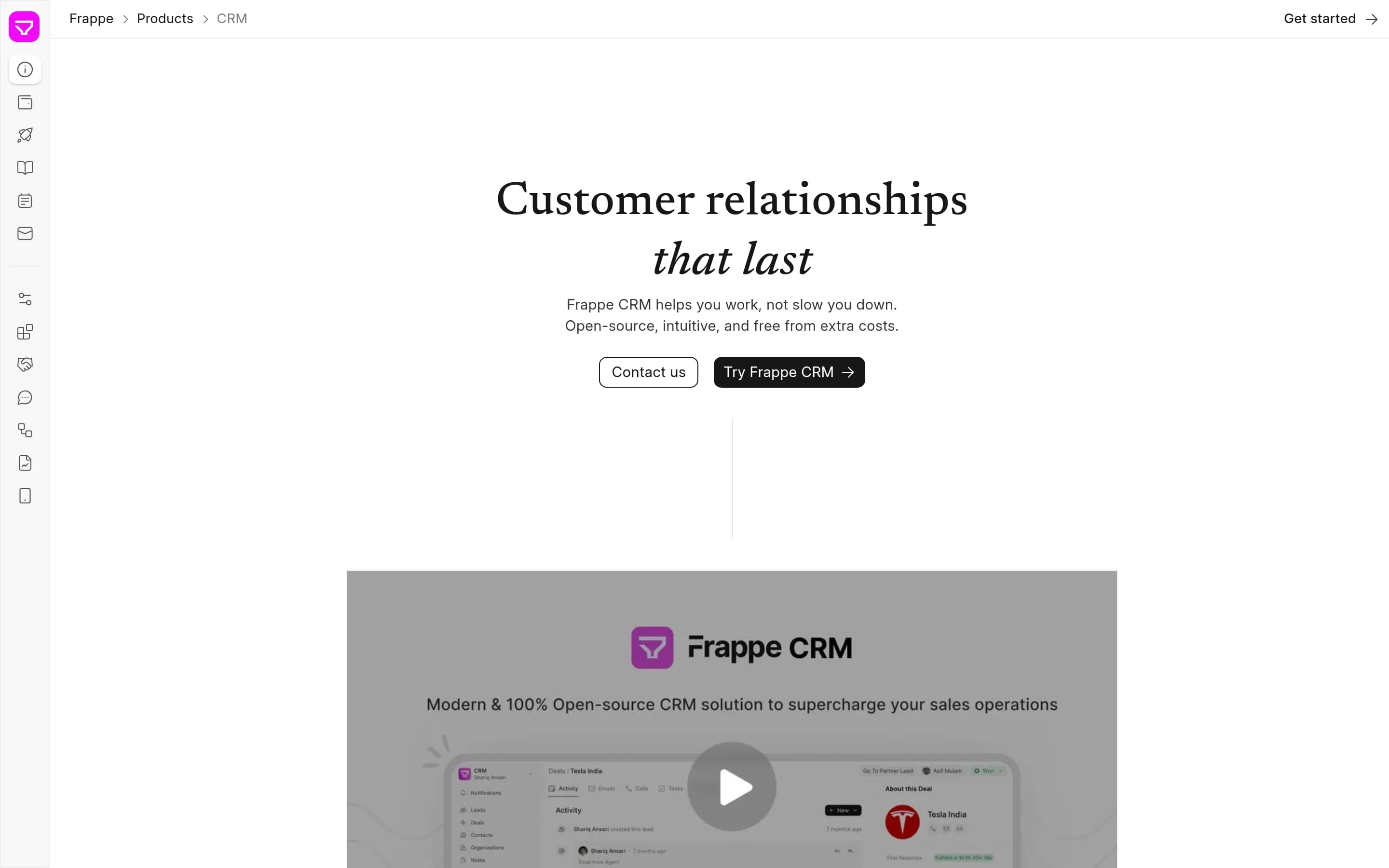
Frappe CRM is the stronger choice for teams that prioritize open-source code, self-hosting, extensible data models, and lead/deal workflows without per-user pricing. Close remains the better fit for sales organizations that need a more fully documented, integrated outbound workspace—particularly SMS, advanced dialers, AI-assisted calling, meeting intelligence, and detailed sales-performance reporting. Frappe covers a
What it does
Frappe CRM is an open-source CRM for modern sales teams. It centralizes leads and deals on dedicated pages containing activities, comments, notes, tasks, and related actions. Kanban views support drag-and-drop stage tracking, while custom views provide filtering, sorting, and configurable columns.
The README documents a graphical web interface, email templates, call UI and logs, Twilio and Exotel calling integrations, call recording, and WhatsApp messaging. It can be hosted through Frappe Cloud or deployed independently using the production install script, Docker Compose, or a local Frappe bench setup.
What it covers
- Lead and deal records
- Visual deal pipelines
- Email-linked conversations
- CRM calling and recording
- Tasks, notes, and activities
- Lead and workflow automation
- Custom fields and views
- Web-based lead capture
What’s different
- No documented built-in SMS
- No documented power or predictive dialer
- No documented AI sales agent
- No documented AI meeting notes
- No documented revenue and rep-performance dashboards
WWacrm1,969
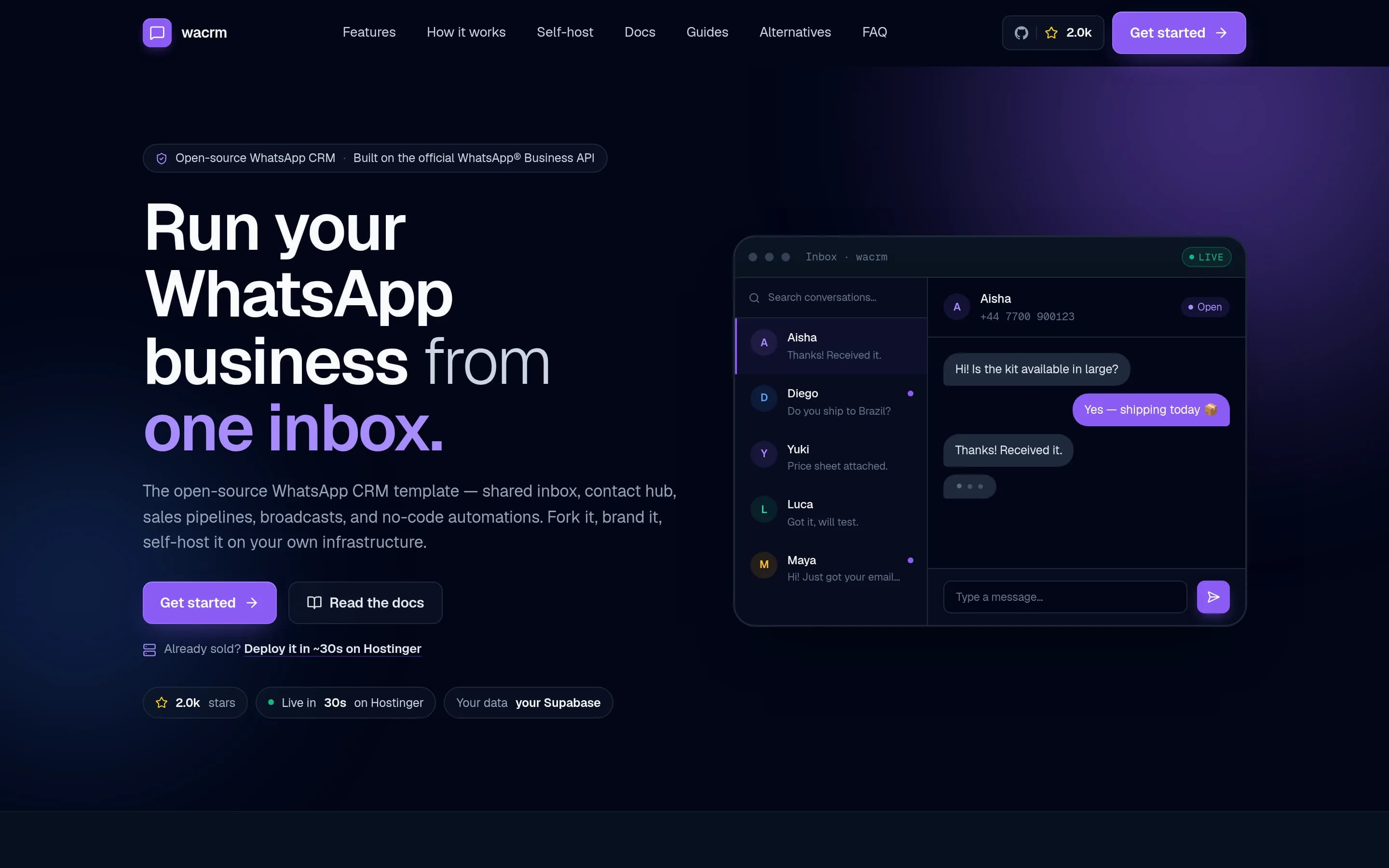
Wacrm is a narrower, WhatsApp-centered alternative that trades Close’s broader sales-communications suite for source access, self-hosting, and customization. Choose Wacrm when WhatsApp is the primary channel and your team can operate and adapt its own deployment; choose Close when built-in calling, email, SMS, task prioritization, meeting capture, or broader sales reporting are essential.
What it does
wacrm is a self-hostable CRM centered on the official WhatsApp Business API. It provides a shared inbox with conversation assignment, statuses, notes, contacts, tags, custom fields, CSV import, deduplication, and Kanban sales pipelines with deals linked to conversations. Broadcasts support Meta-approved templates, delivery and read tracking, and recipient variables.
The application also includes visual no-code automations triggered by messages, contacts, keywords, or schedules, with conditions, waits, tags, and webhooks. An AI reply assistant can draft replies or run an optional capped auto-reply bot with human handoff and a knowledge base. Team accounts, role-based access, dashboards, a REST API, and an MCP server are documented. It runs locally with Next.js and Supabase, or via Docker Compose, Hostinger, Vercel, Railway, or another Node.js host.
What it covers
- Contact records with custom fields
- Deal pipelines with staged boards
- Conversation-linked sales context
- Trigger-based workflow automation
- Pipeline and activity dashboards
- AI-assisted message replies
What’s different
- Built-in voice calling and dialers
- Integrated email and SMS outreach
- Lead-capture forms
- Prioritized sales task inbox
- Meeting transcripts and notes
- AI calling and lead qualification
- Documented representative-performance reporting
DDeskcommCRM570
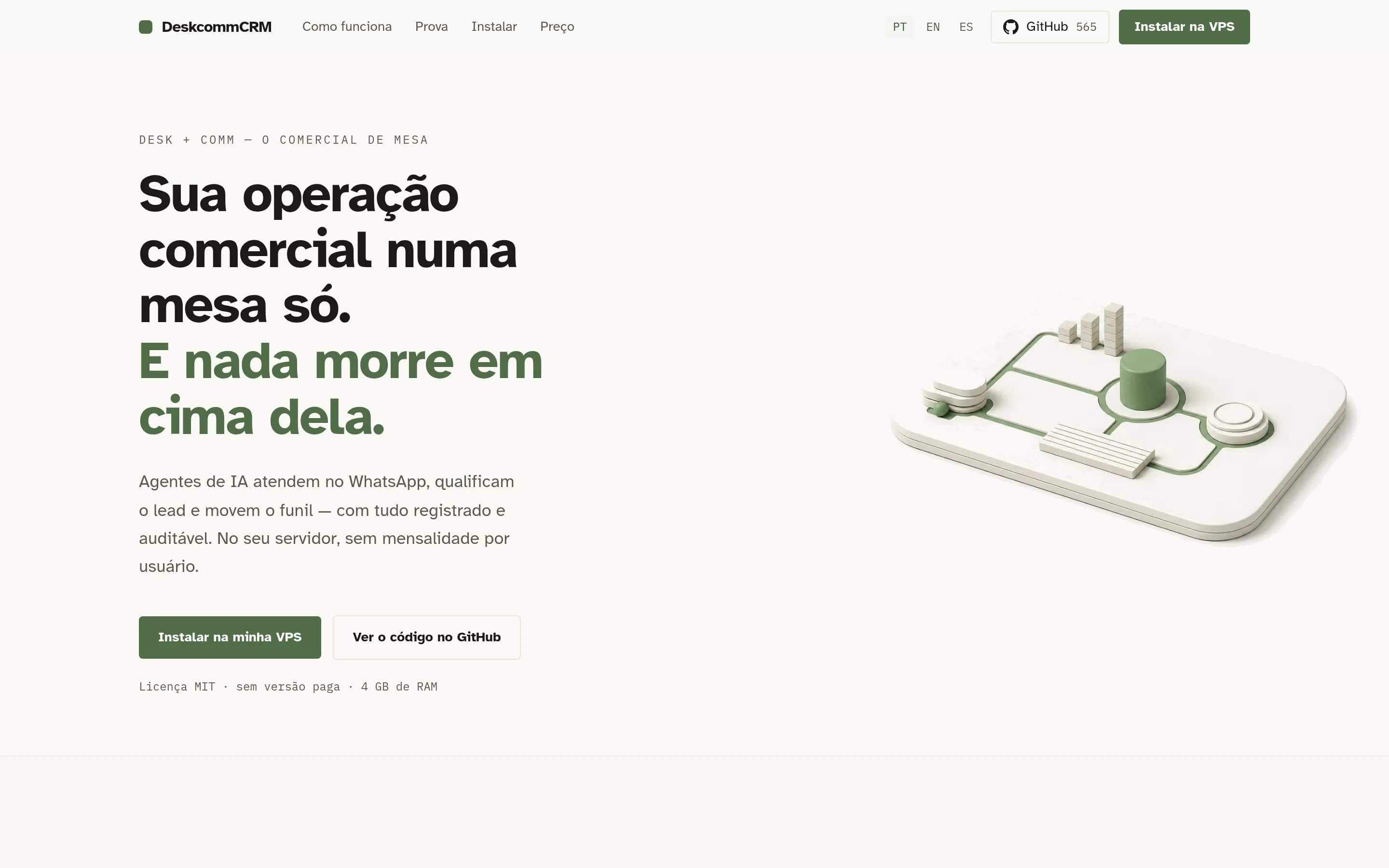
DeskcommCRM is a plausible replacement for teams whose sales process is centered on WhatsApp and that want an MIT-licensed, self-hosted CRM with AI agents, pipelines, follow-up automation, and human handoff. It is not a like-for-like Close replacement: the supplied documentation does not establish native voice calling, integrated email/SMS outreach, meeting capture, or equivalent breadth in sales reporting. Choose it
What it does
DeskcommCRM is an open-source CRM and sales operations system for businesses that sell through WhatsApp. It provides a Kanban sales funnel, contact management, shared WhatsApp inboxes, lead qualification, follow-ups, routing, team assignment, performance views, audit logs, and AI agents that can interact with leads and move them through funnel stages.
The system accepts leads through webhooks and forms, applies WHEN/IF/THEN automations, sends WhatsApp messages, and supports QR-based WAHA connections or Meta Cloud API. It includes RAG knowledge, agent skills, memory, human handoff, multi-tenant isolation, LGPD-oriented controls, and MCP access. The complete application runs on a user-controlled VPS with Docker, Supabase, HTTPS, cron workers, and installation or updates through provided scripts.
What it covers
- Lead and contact records
- Configurable deal pipelines
- Conversation-linked sales workflows
- Trigger-based follow-up automation
- Lead assignment and routing
- Pipeline and representative performance views
- AI-assisted qualification and CRM updates
What’s different
- Native voice calling not documented
- Power or predictive dialing not documented
- Integrated email outreach not documented
- SMS outreach not documented
- Meeting transcription and notes not documented
- Embeddable no-code forms not documented
- Close-compatible data import not documented
DDjango-crm612
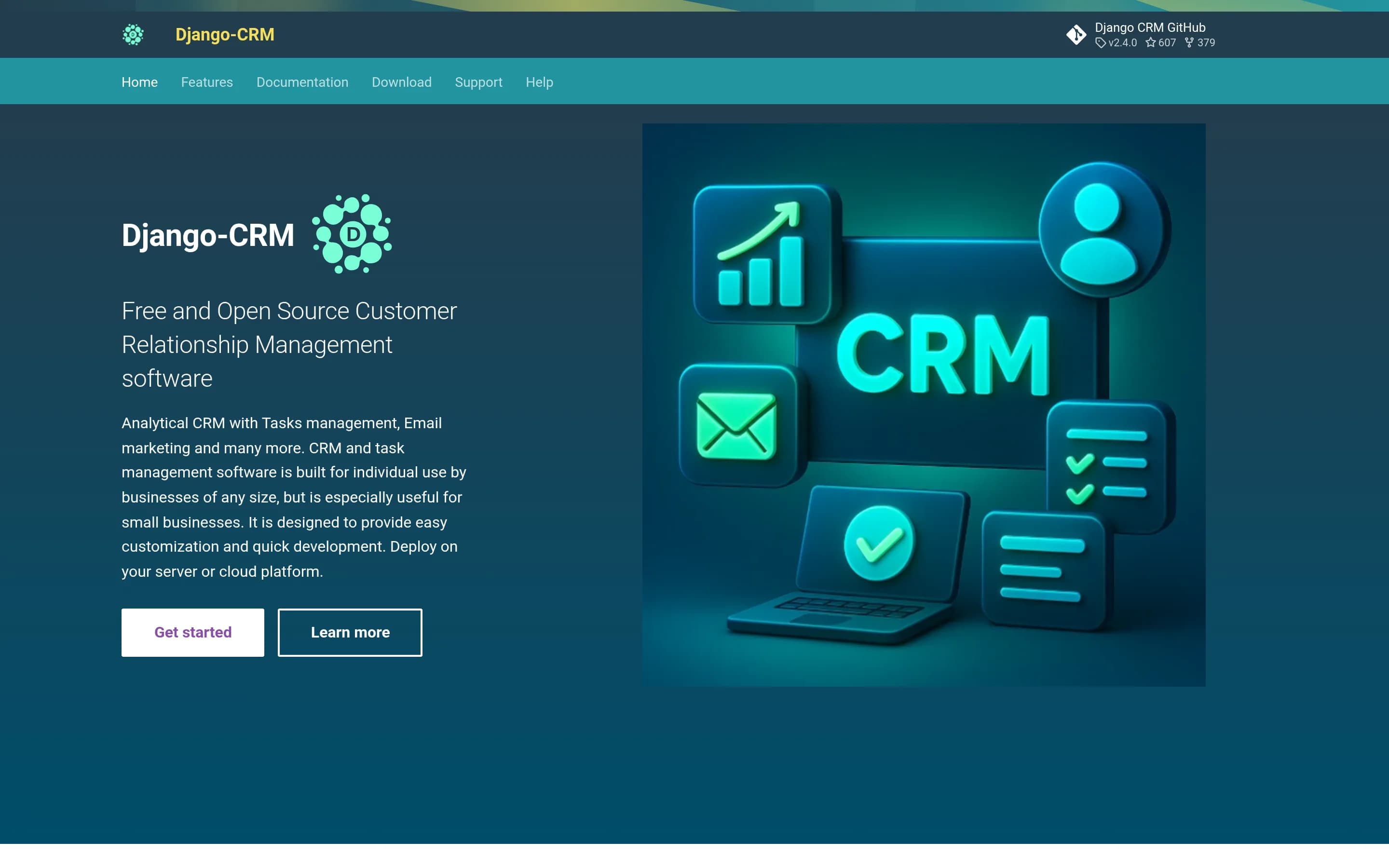
Django-crm is a plausible replacement for teams prioritizing self-hosting, source-level customization, task/project management, and email marketing alongside standard CRM records. Close remains the stronger fit when built-in multichannel sales execution—especially calling, SMS, advanced dialing, sequences, and AI-assisted conversations—is central. The main tradeoff is infrastructure and customization control versus a
What it does
Django-CRM is an open-source customer relationship management system for businesses and freelancers. It manages leads, opportunities, companies, contacts, deals, products, payments, tasks, projects, subtasks, reminders, files, and team assignments, with email messages linked to CRM records.
The system includes deal tracking and forecasting, sales funnel and income reports, lead-source analytics, email accounts using SMTP or IMAP, campaigns, newsletters, templates, segmentation, web-form integration, VoIP callback support, and messenger integrations. It runs as a standard Django project, uses Django Admin for its interface, supports SQLite, MySQL, or PostgreSQL, and is intended for self-hosted or on-premise deployment.
What it covers
- Lead and contact management
- Deal and pipeline tracking
- Task and reminder management
- CRM-linked email history
- Bulk email campaigns
- Web-form lead capture
- Sales analytics and funnel reporting
- Role-based data access
What’s different
- No documented native CRM SMS
- No documented predictive or power dialer
- No documented voicemail drops or call recording
- No documented Close-style multichannel sequences
- No documented AI sales agent
- No documented meeting transcription or AI notes
LLaravel-crm453
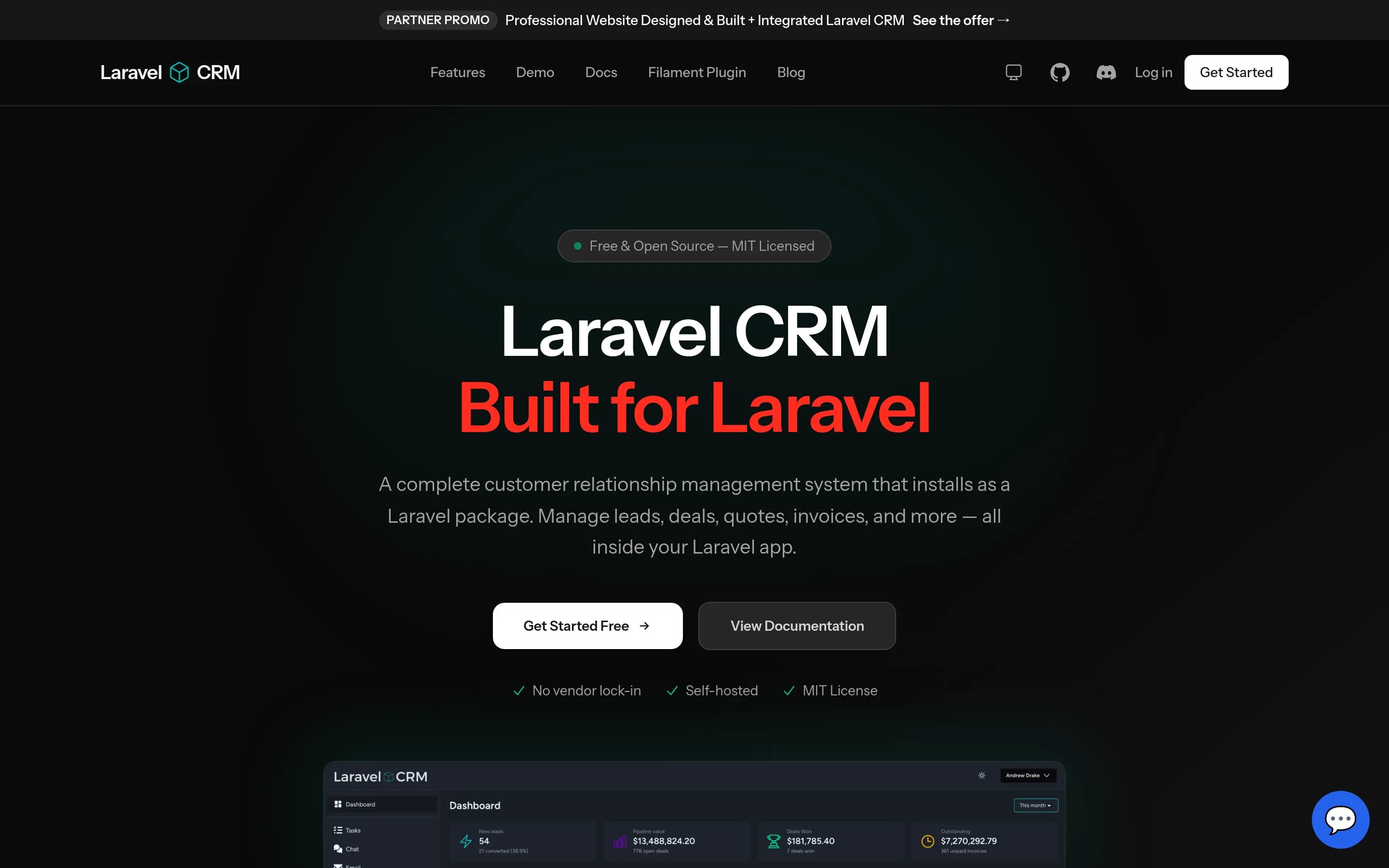
Laravel-crm is a credible alternative for teams that want an MIT-licensed, self-hosted CRM embedded in or built on Laravel, particularly when quotes, invoicing, orders, deliveries, and customization matter. Close remains the stronger fit for sales teams that depend on a hosted, conversation-first workspace with documented built-in calling, advanced dialing, automated follow-up, and AI assistance; equivalent coverage,
What it does
Laravel CRM is an open-source customer relationship management package that can be added to Laravel applications or used as a standalone CRM. Its documented workflows cover sales lead and deal management, customer and contact databases, Kanban boards, activity timelines, notes, tasks, custom fields, users, teams, roles, and permissions.
The product also includes quote creation with accept/reject handling, orders, invoicing, purchase orders, deliveries, email and SMS marketing, web or in-app chat, file uploads, product management, and integrations with Xero and ClickSend. It is installed through Composer and Artisan commands, runs within a Laravel application, and supports multi-tenant CRM SaaS use cases.
What it covers
- Lead and contact management
- Deal pipeline tracking
- Tasks and activity history
- Custom fields
- Email marketing or outreach
- SMS marketing or outreach
- Pipeline and performance reporting
What’s different
- Built-in CRM telephony not documented
- Power or predictive dialing not documented
- Trigger-based sales sequences not documented
- AI sales agent not documented
- AI meeting transcription not documented
- No current CSV import/export documented